IGP, first protected 2024Cow and sheep milk, pasteurisedSemi, hardWashed rindAlso Caciottone di Norcia IGP
A semi-hard to hard cheese from pasteurised milk, 90 to 95 percent cow and 5 to 10 percent sheep, made in the upper Valnerina. Winter transhumance left little sheep's milk for cheese, and from the 1950s the mixed milk became the settled method. The name marks a bigger cheese than the traditional cow's-milk caciotte. Wheels are 20 to 22 cm across and 9 to 11 cm high, about 3.2 kg, with a thin washed rind. It was registered in the EU as an IGP on 2 August 2024.
Taste: Tender paste, firmer near the rind, with a milky, cooked-butter smell. The flavour is fragrant, aromatic and delicate yet lasting, ending in a marked cream aftertaste.
Ageing: Dolce 20 to 60 days, medio 61 to 120 days, riserva 121 to 365 days
Made in: The communes of Norcia, Cascia, Monteleone di Spoleto, Preci and Poggiodomo in the province of Perugia (the Valnerina)
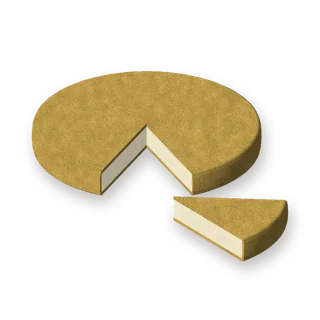
Sheep milkHardNatural rindAlso Pecorino di Norcia del pastore
The shepherds' sheep's milk pecorino of the upper Valnerina, listed as a traditional agri-food product (PAT) of Umbria and not a protected name. It is made from January to August from the whole milk of ewes fed on local green fodder. The old method sets the rennet from lamb, dried by the fire so it carries a light smoke into the cheese, and heats the cauldron with wood. Cylinders are 15 to 24 cm across and 8 to 14 cm tall, 3 to 5 kg. Italian Wikipedia calls the dairy version, Pecorino di Norcia del caseificio, a recent attempt to modernise production.
Taste: Piquant. Atlante Caseario says the sharpness grows with ageing, while Italian Wikipedia says it eases. The rind runs through shades of yellow, more or less crusted depending on age, and the paste is white to straw yellow.
Ageing: 30 days of maturing (Atlante Caseario); 120 to 180 days for the aged cheese (Italian Wikipedia)
Made in: The upper Valnerina: Norcia, Cascia, Preci, Monteleone di Spoleto and Poggiodomo, with Castelluccio di Norcia

DOP, first protected 1986Sheep milk, bothSemi, hardNatural rindAlso Pecorino Toscano DOP
Sheep's milk cheese with a DOP registered on 1 July 1996. The sheep's milk must come from Tuscany or a short list of neighbouring communes, and only two of them are in Umbria: Allerona (Terni) and Castiglione del Lago (Perugia) on Lake Trasimeno, so most Pecorino Toscano is Tuscan. Wheels are cylindrical with flat faces and slightly convex sides, 15 to 22 cm across and 750 g to 3.5 kg, with a yellow rind. The milk may be raw or heat treated up to pasteurisation, and salting, dry or in brine, lasts according to the weight of the wheel. It is sold fresh (from 20 days) or aged (from 4 months).
Taste: Sweet, fragrant and never salty or piquant, according to Qualigeo. The fresco is tender and white to slightly straw; the stagionato is compact, firm to the cut and straw coloured.
Ageing: Fresco from 20 days, stagionato from 4 months
Made in: All of Tuscany plus bordering communes in the province of Viterbo (Lazio) and, in Umbria, only Allerona (Terni) and Castiglione del Lago (Perugia)
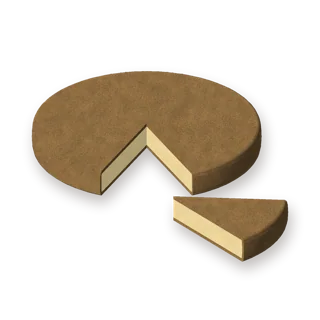
Sheep milk, pasteurisedHardNatural rind
A sliceable sheep's milk pecorino on the Umbrian list of traditional agri-food products. The milk is pasteurised, then set with natural rennet infused with hyssop, mint, dandelion and thyme. The wheels dry on boards for two days until a rind forms, are rubbed with olive oil carrying the same herbs, rest 3 to 4 months in a cool room, then spend 45 to 60 days in wooden barrels. They are wrapped in jute paper and weigh 1 to 3 kg. Atlante Caseario says adding herbs to the rennet goes back to antiquity.
Taste: A herbal, aromatic pecorino. Atlante Caseario says the herbs in the rennet and the oil flavour the cheese and also sanitise it, leaving the aroma of the herbs and of the milk intact.
Ageing: 3 to 4 months in a cold store, then 45 to 60 days in wooden barrels, then sold after about a month more
Made in: Dozens of Umbrian communes, among them Gubbio, Gualdo Tadino, Foligno, Trevi, Norcia, Cascia and Sellano; the herds graze the high hills and mountains of the Eugubino-Gualdese area

Cow and sheep milk, pasteurisedSemi, softNatural rind
A small soft caciotta with chopped truffle in the curd, an Umbrian traditional agri-food product. It is made in autumn, in truffle season, from about 70 percent cow and 30 percent sheep milk that has been pasteurised, with half a kilo of finely chopped truffle to 50 kg of finished cheese. Atlante Caseario dates it to the 1960s, when local cheese was anonymous and truffle gave it a name; the same method gives onion and vegetable caciotte. Forms are 8 to 15 cm across and 0.3 to 1.5 kg.
Taste: Straw-coloured paste dotted with pinpoints of chopped truffle, which give it a characteristic truffle aroma. The rind is lightly crusted and pale yellow with darker specks.
Ageing: Matured 15 to 30 days; not aged further
Made in: The Eugubino-Gualdese district (Gubbio and Gualdo Tadino); Italian Wikipedia also names Norcia
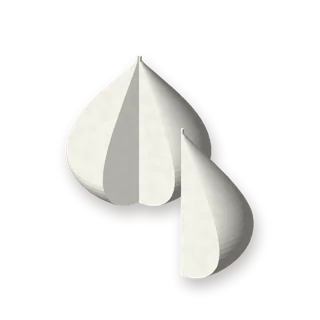
Sheep milkWheyAlso Ricotta salata di Norcia
A salted, dried ricotta made from the whey left after pecorino in the upper Nera valley, from January to August according to Atlante Caseario (Slow Food gives November to July). The whey is heated to 90 C for ordinary ricotta, then to nearly 95 C without boiling. The ricotta drains in a cloth for 12 hours, is wrung, hangs another 12 hours, is rolled once in salt and matures in a dry cellar. Slow Food explains the pear shape: the cloth bag was wide at the base and narrow at the mouth. Forms are 14 to 20 cm tall and 8 to 12 cm across, 0.5 to 1.5 kg, with no rind.
Taste: Solid, compact white paste with pearly reflections. The flavour is characteristic and strong, lightly salty. Slow Food says a young one is good dressed with olive oil and pepper and an aged one is grated over pasta and soups.
Ageing: 20 to 30 days in a dry cellar (Atlante Caseario); 15 days up to 5 months (Slow Food)
Made in: The upper Nera valley (Valnerina), province of Perugia: Norcia, Cascia, Preci, Monteleone di Spoleto and Poggiodomo