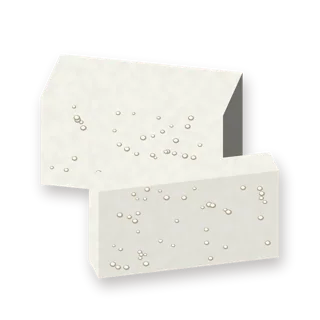
PDO, first protected 1988Sheep and goat milk, bothOtherAlso Φέτα
A white brined cheese made only from sheep milk, or sheep milk with at most 30 percent goat milk, from local breeds, and ripened for at least two months; the milk may be raw or pasteurised. The 2002 EU regulation records that Greek feta practice has been codified since 1935 and that its production area was protected in 1988. Greek ministerial decision 313025 of 11 January 1994 recognised the PDO; the EU registered the name in 1996, a court annulled that entry, and the registration in force dates from 15 October 2002. The area is mainland Greece and Lesbos, and the 1994 application lists Imathia, where Naoussa lies, among the Macedonian prefectures whose milk may be used.
Taste: Salty and slightly acidic, sometimes slightly peppery, according to the European Commission; Qualigeo adds that the taste is very intense, salty and persistent.
Ageing: At least 2 months in total: up to 15 days of first-stage ripening, then 2 to 4 degrees C, in brine
Made in: Mainland Greece and the department of Lesbos

PDO, first protected 1994Sheep and goat milk, bothPasta, filataWaxed rindAlso Κασέρι
A semi-hard to hard table cheese made mainly from sheep milk with no more than 20 percent goat milk, raw or pasteurised. The curd is cut into slices, dipped in hot water and kneaded into a smooth mass before moulding and dry salting, then ripened at least three months. The current specification allows cylinders up to 30 cm across and 7 to 10 cm high, or rectangular loaves, usually coated in paraffin wax. Greek ministerial decision 313027 of 11 January 1994 recognised the PDO and the EU registered it in June 1996. The 1994 application lists Imathia, the prefecture of Naoussa and Veria, and the current specification covers all of Central Macedonia.
Taste: Qualigeo describes a tasty, slightly salty flavour that stays in the mouth; the specification gives a pleasant taste, a rich aroma and a compact, cohesive, semi-hard paste, usually without holes.
Ageing: At least 3 months
Made in: All of Central Macedonia and Western Macedonia, the Drama, Kavala and Xanthi units, four Thessaly units (Karditsa, Larissa, Trikala, Magnesia) and Lesvos

PDO, first protected 1994Sheep and goat milkWheyAlso Μανούρι
A white whey cheese made from the whey of sheep or goat milk, enriched with sheep or goat milk or cream; English Wikipedia calls it a by-product of feta making. It is drained in cloth bags into a cylinder usually 20 to 30 cm long and 10 to 12 cm across, with no rind and no holes. Greek ministerial decision 313028 of 11 January 1994 recognised the PDO and the EU registered it in June 1996. Imathia, the prefecture of Naoussa and Veria, is named in the production area.
Taste: A delicate cheese with a soft, flexible white paste and no holes. English Wikipedia, quoting the Washington Post, gives a clean, subtle nutty flavour with a bit of sheepiness and the barest hint of tang; it holds only about 0.8 percent salt, far less than feta.
Ageing: Not ripened: after draining it goes to cold rooms at 4 to 5 degrees C until sale, and Qualigeo says to keep it refrigerated for no longer than 15 days
Made in: Thessaloniki, Chalkidiki, Kilkis, Imathia, Pieria, Pella, Florina, Kozani, Kastoria and Grevena in Central and Western Macedonia, plus Larissa, Trikala, Karditsa and Magnesia in Thessaly
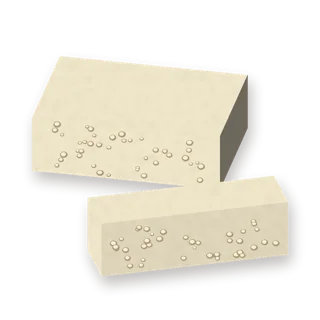
PDO, first protected 1994Sheep and goat milk, bothSemi, hardAlso Μπάτζος
A rindless brined cheese from sheep or goat milk, or both, raw or pasteurised, ripened for at least three months in a brine of 10 to 12 percent salt. It is a low-fat cheese, white to pale yellow, with many irregular small holes. Greek ministerial decision 313057 of 17 January 1994 recognised the PDO and the EU registered it in June 1996. Greek Wikipedia traces it to the Voio area of Western Macedonia. Imathia is named in the production area, and the MEDEAT gastronomy site gives Imathia as the origin of its batzos recipe.
Taste: Sourish, very salty and slightly spicy, with a low fat content (Qualigeo gives 19 to 20 percent). MEDEAT describes it fried as saganaki or grilled, and says a smoked version, sold without the PDO name, goes very well with red wines.
Ageing: At least 3 months in brine of 10 to 12 percent salt, in metal containers in a cool place
Made in: Thessaloniki, Chalkidiki, Kilkis, Imathia, Pieria, Pella, Florina, Kozani, Kastoria and Grevena in Western and Central Macedonia, and Larissa, Trikala, Karditsa and Magnesia in Thessaly
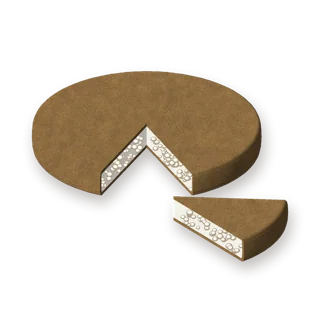
PDO, first protected 1994Sheep and goat milkHardNatural rindAlso Κεφαλογραβιέρα
A hard table cheese made from sheep milk, or sheep milk with up to 10 percent goat milk. Qualigeo says it derives from kefalotyri, dates from 1912 and was standardised in 1967. Greek ministerial decision 313032 of 11 January 1994 recognised the PDO and the EU registered it on 21 June 1996. The specification gives a cylinder of 4 to 6 kg or 10 to 12 kg with a thin, hard rind; Qualigeo describes a white paste with small holes that hardens after six months. Imathia, where Naoussa lies, is not in the PDO area; the cheese appears here because VAENI's Naoussa winery tour serves it with its paid tasting. VAENI's page does not say where it is made.
Taste: Qualigeo gives a pleasant, slightly salty taste and a somewhat strong aroma. English Wikipedia lists it in saganaki, fried in seasoned flour, and as a grating cheese for pasta.
Ageing: At least 3 months: about 10 dry salting rounds at 14 to 16 degrees C, then ripening below 6 degrees C
Made in: Ioannina, Thesprotia, Arta and Preveza in Epirus; Florina, Kozani, Kastoria and Grevena in Western Macedonia; Aetolia-Acarnania and Evrytania