
AOP, first protected 1976Goat milk, rawSemi, hardNatural rindAlso Chavignol
A small flat-topped cylinder of raw goat's milk, slightly convex around its side and weighing 60 to 90 g. It is made in Cher, Nièvre and Loiret, in the same country as the Sancerre vineyards. The thin, wrinkled rind is usually covered in a white mould that turns bluish as the cheese ages, and the consortium sells it at several stages from mi-sec to fully aged and crumbly. It has been an AOC since 1976 and an AOP since 1996. The consortium traces the name to the Berry word crot, meaning a hole.
Taste: Firm, white, smooth paste that looks chalky, dense but very fine. Aged crottins show woodland and mushroom aromas, and dry ones turn nutty, with a lot of hazelnut, according to the producers' consortium.
Ageing: Sold young, mi-sec, bleuté (blue-tinged) or fully aged and crumbly
Made in: Cher, Nièvre and Loiret departments, around Sancerre
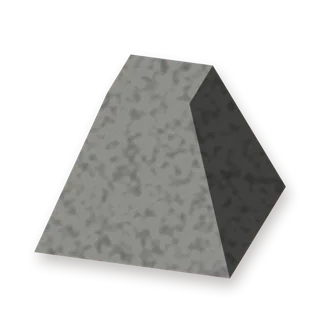
AOP, first protected 1998Goat milk, rawSoft, bloomyAsh rind
A raw goat's milk cheese in the shape of a truncated pyramid with a square base, about 7 to 8 cm high and 6 to 7 cm along the base, weighing 220 g (110 g for the Petit Valençay). It is coated in ash, and by about day 11 of ripening the rind turns into a bloomy coat between light grey and blue-grey. It has been an AOC since 1998 and an AOP since 2014. A legend repeated by the consortium says Talleyrand cut the points off before giving the cheeses to Napoleon, so the shape would not recall his defeat in Egypt.
Taste: Creamy and melting when young. With age the paste firms up and the aromas move from fresh nuts to dried fruit. The consortium suggests eating the rind to strengthen the forest-floor and hazelnut notes.
Ageing: At least 11 days
Made in: The Berry country of Indre and neighbouring departments (Cher, Indre-et-Loire, Loir-et-Cher), 228 communes
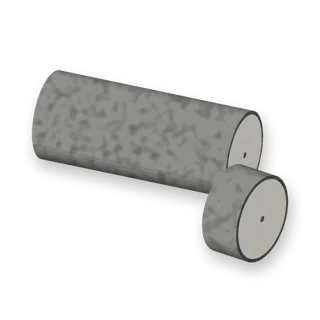
AOP, first protected 1990Goat milk, rawSoft, bloomyAsh rind
A raw goat's milk log, truncated so that one end is wider (about 5.5 cm across) than the other (about 4.5 cm), and roughly 16 to 18 cm long. A rye straw runs through it from end to end, engraved with the appellation and the maker's number. It once held the soft log together and is now the mark of an authentic cheese. The rind ripens to a pleated, ash-grey to bluish down. It has been an AOC since 1990 and an AOP since 1996, and the consortium names it the best-selling French goat cheese of 2019.
Taste: Smooth, melting paste with a tangy, hazelnut flavour when young. Aged, it turns dry and crumbly and the flavour grows more pronounced, according to the producers' consortium.
Ageing: At least 10 days
Made in: Touraine and neighbouring areas of Centre-Val de Loire and Nouvelle-Aquitaine
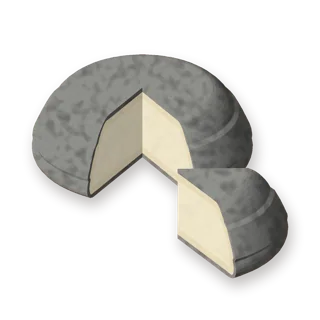
AOP, first protected 1975Goat milk, rawSoft, bloomyAsh rind
A raw goat's milk cheese shaped like a flat, truncated cone, a pebble 9 cm across and 3 cm thick, weighing around 150 g. The surface is coated with salt and vegetable charcoal (traditionally vine ash), which gives the natural, grey, ashy rind. The paste is ivory-white, matte, smooth and melting. It comes from the border of Touraine, Berry and Sologne, and has been an AOC since 1975 and an AOP since 1996. The consortium counts it the third best-selling French goat cheese of 2019.
Taste: Sweet and hazelnut, with a balance of salty, acid and bitter. Young cheeses are delicate; with age the paste firms and gets saltier, with goat notes on the rind and hazelnut in the paste.
Ageing: At least 10 days; about 20 days is ideal
Made in: Where Touraine, Berry and Sologne meet: Loir-et-Cher, Indre and Cher
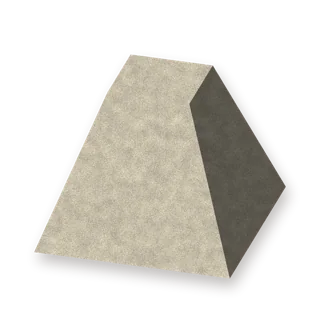
AOP, first protected 1972Goat milk, rawSoft, bloomyNatural rind
A raw goat's milk cheese in a tall, slim, square-based truncated pyramid, about 12.5 cm high and 2.5 cm square at the top, weighing around 250 g. Unlike Valençay, Selles-sur-Cher and Sainte-Maure it is not ash-coated: the thin rind carries white and bluish surface moulds, and it is sold either ivory (en blanc) or blue-tinged (en bleu). It was the first goat cheese AOC, in 1972, and an AOP since 1996. The shape is said to echo the church steeple of the village.
Taste: Balanced, creamy, melting and smooth. The white version is tangy with dried-fruit flavours; the blue one is stronger and more robust. The consortium advises cutting it along its height so every slice carries the full range of aromas.
Ageing: At least 11 days, sold white (en blanc) or blue-tinged (en bleu)
Made in: The Brenne country of Indre, 22 communes
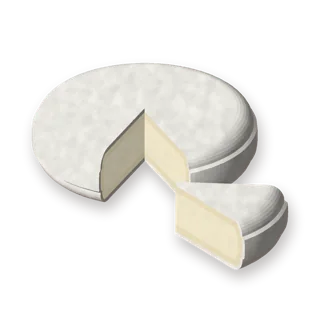
Cow milk, pasteurisedSoft, bloomyBloomy rind
A soft cow's milk disc, about 11 cm across and 3 cm high, with a thin white down on the rind that picks up blue moulds as it ages. It is named for Olivet near Orléans and is documented as early as 1767 as Fromages d'Olivet, près d'Orléans. It is not a protected name, so the cheese varies by maker. Versions exist coated in ash, wrapped in hay, or crusted with pepper. Wikipedia notes that traditional farm production has stopped and that the cheese is now made by dairies, including in Indre and Calvados.
Taste: A delicate milky flavour with hay, sage or pepper notes depending on the coating; a mushroom character develops with age. The paste is supple, fine and cream to pale yellow.
Ageing: About 15 days in a humid room at 12 C, then further weeks depending on the variety
Made in: Named for Olivet, near Orléans in Loiret; Wikipedia notes modern production in Indre and Calvados