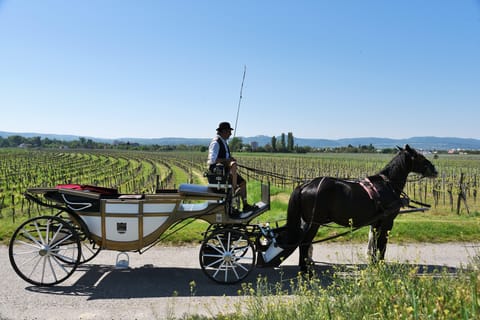
Wachau Porcelain Tour A sparkling carriage ride through the vineyards
An extraordinary, discreet carriage tour for 2 with fresh sandwiches & a bottle of sparkling wine
 Straw to light gold
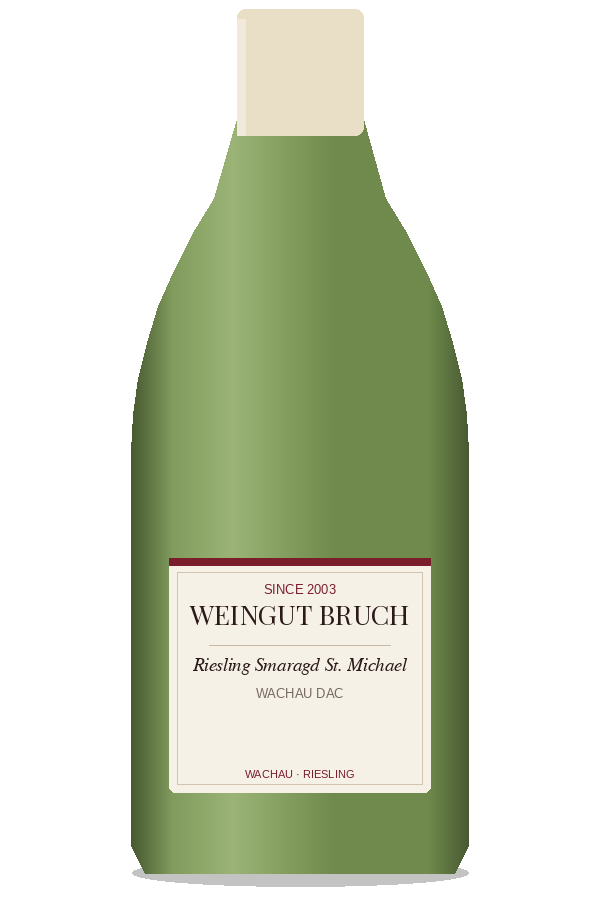
Still White · Wachau DAC · Wachau
Riesling Smaragd from the sandy-gneiss terraces of St. Michael by Weingut Bruch; a distinctive floral lift and sandy mineral character distinguishes this sub-village expression.
No critic score is published for this bottle that we can cite with a reviewer, a vintage and a review year, so none is shown. The rating in the header is our own.
Aroma: lime zest, white flower, sandy mineral, peach
Palate: citrus peel, pear, light mineral, fresh herbs
Riesling Smaragd from the sandy-gneiss terraces of St. Michael by Weingut Bruch; a distinctive floral lift and sandy mineral character distinguishes this sub-village expression.
Allow 5 minutes from open to pour.
Martin Bruch farms 6 hectares of steep terraces around St. Michael, a sub-village of Weissenkirchen. The sandy-gneiss soils of St. Michael give a distinctive floral quality to the Rieslings. Fourth-generation estate.
On the nose, lime zest, white flower, sandy mineral, peach. On the palate, citrus peel, pear, light mineral, fresh herbs. Structurally medium-bodied, low tannins, high acidity with a fresh and floral finish. Riesling Smaragd from the sandy-gneiss terraces of St. Michael by Weingut Bruch; a distinctive floral lift and sandy mineral character distinguishes this sub-village expression.
Drink 3-12 from vintage. Young vintages benefit from 30-90 minutes of decanting; mature bottles should be handled carefully for sediment.
Steamed fish with herb cream is the canonical pairing. Other strong matches include Smoked trout pate and Tomato and mozzarella salad. The wine's floral mineral character and fresh acidity complement gently cooked fish.
The blend is Riesling. The wine is classified as Wachau DAC.
An extraordinary, discreet carriage tour for 2 with fresh sandwiches & a bottle of sparkling wine
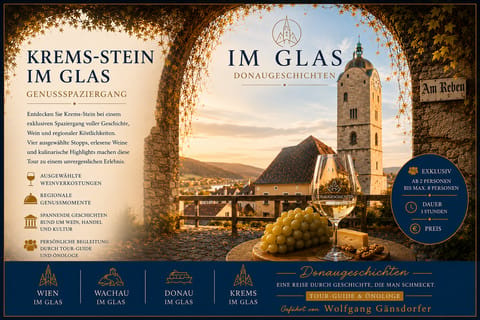
Discover Krems & Stein with pleasure! Between old wine presses, we taste finger foods, typical Wachau/Krems wines, and share stories, with wit, taste, and a real sense...
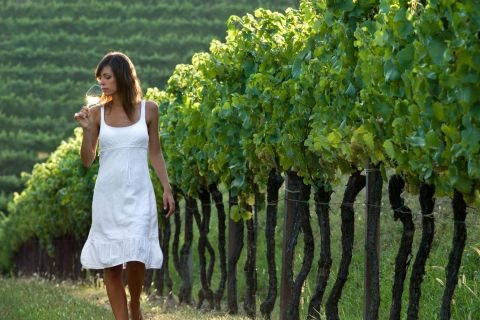
Enjoy a small group, half-day long wine tasting tour near Vienna. Meet with local winemakers, and taste quality Austrian wines. Complete your experience with a traditi...