Grüner Veltliner
Austria's flagship white grape accounts for roughly 50 percent of national vineyard area and reaches its apex of complexity in the Wachau, Kremstal and Kamptal.
The grapes that define Wachau: the canonical varietals and how the region expresses them.
The grapes that define Wachau: the canonical varietals and how the region expresses them.
Austria's flagship white grape accounts for roughly 50 percent of national vineyard area and reaches its apex of complexity in the Wachau, Kremstal and Kamptal.
A Wachau white variety planted after Grüner Veltliner in total area, occupying the steepest terrace plots on primary granite, gneiss and mica schist.
A historic variety considered indigenous to the Wachau, Neuburger is a natural crossing of Roter Veltliner and Sylvaner. It produces full-bodied, nutty whites with low acidity and almond, hazelnut and cream notes.
Yellow Muscat is a minority variety in the Wachau but one with devoted producers including F.X. Pichler and Lagler. At its Wachau best it is intensely floral (rose petal, orange blossom, fresh grape), silkily textured and often made in the lighter Steinfeder or Federspiel tiers. F.X. Pichler's small-parcel Gelber Muskateller is poured at the best Viennese restaurants as an aperitif style. It lacks the ageing potential of Riesling or Grüner Veltliner but delivers immediate aromatic pleasure.
Pinot Blanc in the Wachau is called Weissburgunder and is planted in small quantities at estates including Rudi Pichler (5 percent of plantings), Lagler and Özelt.
Early-ripening red Veltliner (the name means Early-Red Veltliner, despite being a white wine) is a historically documented Austrian variety with records predating phylloxera.
The parent of Grüner Veltliner (itself a natural crossing), Roter Veltliner (Red Veltliner, though the wine is white) is nearly extinct. The Wachau DAC permits it under the Gebietswein tier.
A Riesling-Madeleine Royale crossing widely planted in Austria through the mid-20th century, Müller-Thurgau has declined sharply in favour of Grüner Veltliner and Riesling.
Known as Morillon in Styria and by its international name in the Wachau, Chardonnay is a minor variety permitted under the Wachau DAC. A small number of estates (including Hutter and Winzer Krems in neighbouring Kremstal) produce it, typically in an unoaked or lightly oaked style. Not a signature of the Wachau but present as a versatile white option.
A small but growing presence in the Wachau, Sauvignon Blanc is bottled by a handful of estates including Höllmüller in Joching. Permitted under the Wachau DAC Gebietswein and Ortswein tiers, it typically shows cooler-climate green herb, lime zest and fresh-cut grass character. It is not a traditional Wachau variety (Styria is Austria's Sauvignon Blanc home) but it finds a place at a few open-minded producers.
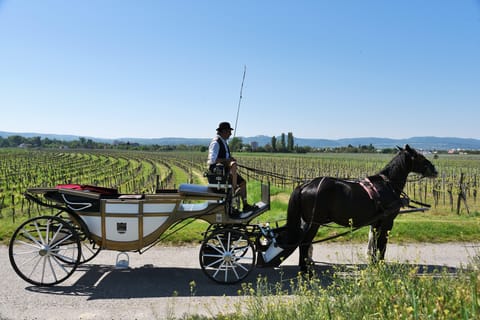
An extraordinary, discreet carriage tour for 2 with fresh sandwiches & a bottle of sparkling wine
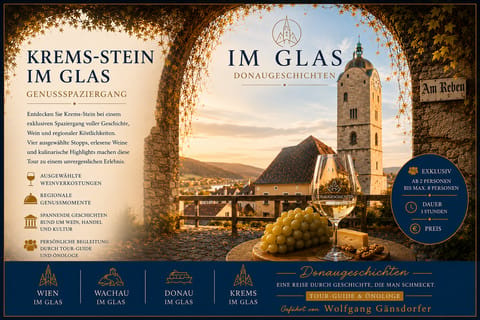
Discover Krems & Stein with pleasure! Between old wine presses, we taste finger foods, typical Wachau/Krems wines, and share stories, with wit, taste, and a real sense...
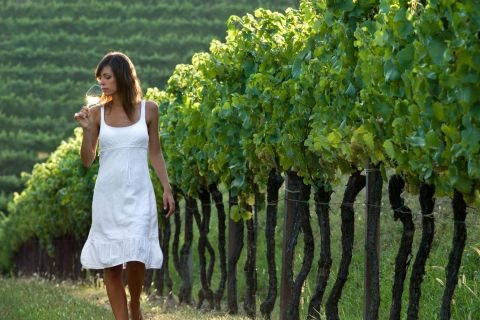
Enjoy a small group, half-day long wine tasting tour near Vienna. Meet with local winemakers, and taste quality Austrian wines. Complete your experience with a traditi...
Peak wine-travel season in Wachau is spring through autumn, with harvest the standout window.
classified-growth and grand-cru estates require booking days to weeks ahead; smaller family domaines often take walk-ins midweek.
most estates open 10:00 to 17:00 by appointment, often closed Sunday and Monday.
tipping is not expected at tastings; buying a bottle from the cellar door is the customary thank-you.
Ask the next local you meet what they would order. Wachau rewards trust.