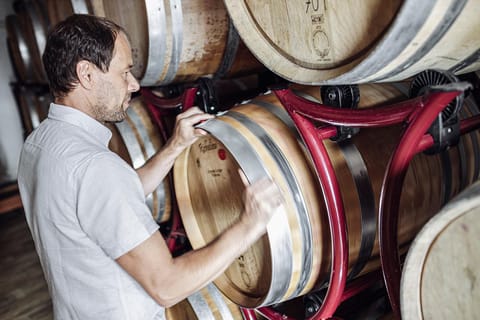
Bolzano: Loacker Wine Experience with Tasting
Discover the world of Loacker wines on a guided tour in Bolzano. Explore the vineyards, visit the barrel cellar, and enjoy a tasting of 6 wines at the panoramic SKYWIN...
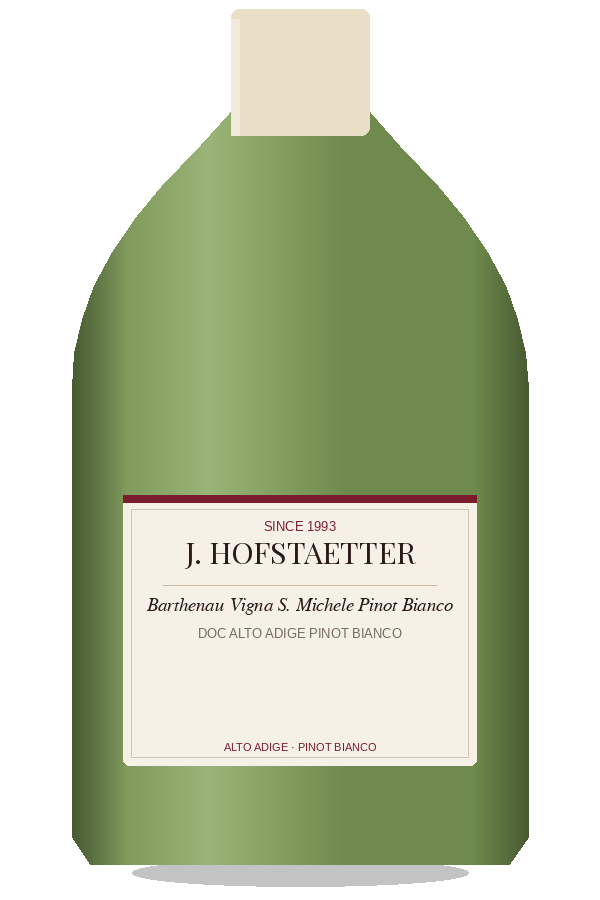 Straw to light gold
Still White · DOC Alto Adige Pinot Bianco · Alto Adige
Hofstaetter's single-vineyard Pinot Bianco from the Mazon plateau at 450 metres on biostimulant-mineral-rich Werfen sedimentary rock. The compact rock prevents deep root growth, creating positive stress that yields a Pinot Bianco of marked minerality and elegant structure.
No critic score is published for this bottle that we can cite with a reviewer, a vintage and a review year, so none is shown. The rating in the header is our own.
Aroma: green apple, white peach, flint, lemon zest
Palate: citrus, marked minerality, elegant structure, saline finish
Hofstaetter's single-vineyard Pinot Bianco from the Mazon plateau at 450 metres on biostimulant-mineral-rich Werfen sedimentary rock. The compact rock prevents deep root growth, creating positive stress that yields a Pinot Bianco of marked minerality and elegant structure.
Hofstaetter extended the Barthenau Vigna designation from Pinot Nero (Vigna S. Urbano) to Pinot Bianco (Vigna S. Michele) in the early 1990s. The Pinot Bianco parcel sits on a gently sloping hillside at 450 metres on the same Mazon plateau as Vigna S. Urbano, on biostimulant-mineral Werfen sedimentary rock.
Green apple, white peach, flint and lemon zest on the nose; citrus, marked minerality, elegant structure and saline finish on the palate. Medium-bodied with high acidity and a long mineral finish.
Drink between 5 and 20 years from vintage. Young vintages show fresh stone fruit; cellared bottles develop honey, almond and pronounced saline minerality.
From a single parcel on the Mazon plateau (Montagna/Egna) at 450 metres altitude on Werfen sedimentary rock. The biostimulant minerals in the soil are the source of the wine's marked minerality.
Discover the world of Loacker wines on a guided tour in Bolzano. Explore the vineyards, visit the barrel cellar, and enjoy a tasting of 6 wines at the panoramic SKYWIN...

Visit Verona and the Valpolicella wine region on a full-day tour. Enjoy a guided walking tour of Verona, taste Amarone and Valpolicella wines at a family-run winery, a...
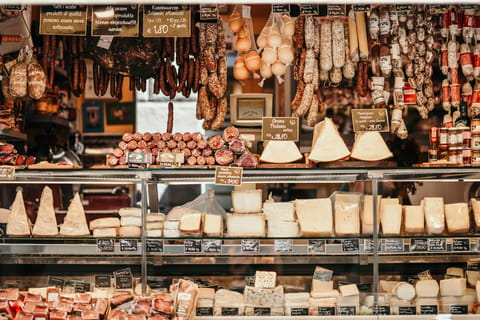
Discover the unique culinary tradition of Bolzano on a street food tour with a local guide. Visit food stalls and sample street food as you stroll through the historic...