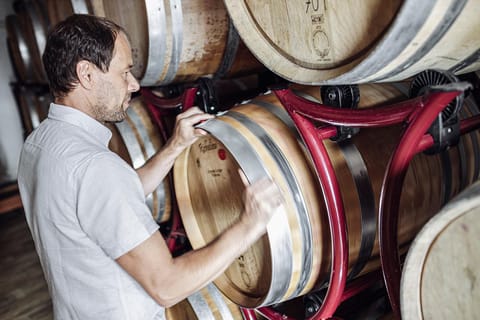
Bolzano: Loacker Wine Experience with Tasting
Discover the world of Loacker wines on a guided tour in Bolzano. Explore the vineyards, visit the barrel cellar, and enjoy a tasting of 6 wines at the panoramic SKYWIN...
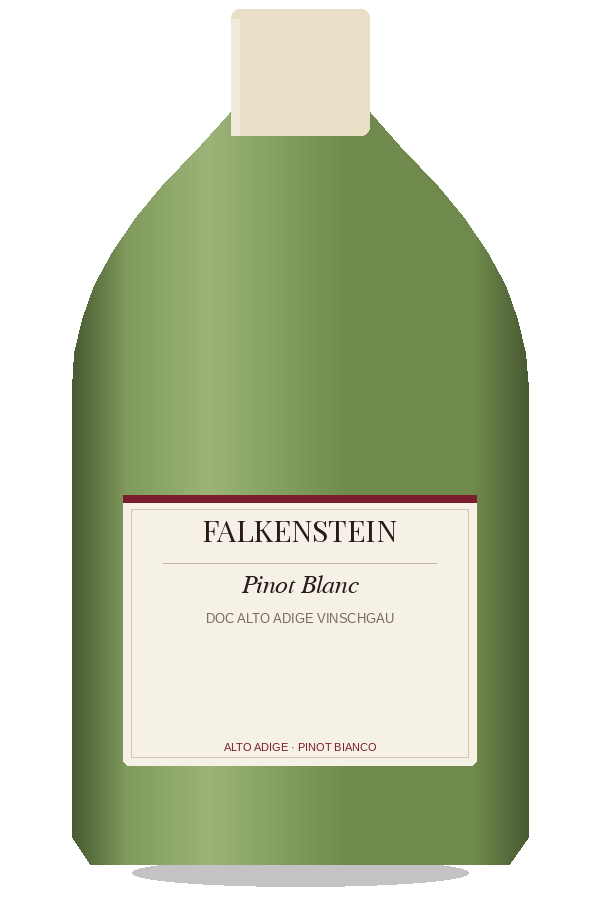 Pale gold
Still White · DOC Alto Adige Vinschgau · Alto Adige
Falkenstein Pinot Blanc from Naturno-Vinschgau sandy granite-gneiss soils: apple, pear and citrus-fruit aromatics; full acidity and pleasantly crispy palate from 10 months on lees in acacia plus 12 months in bottle.
No critic score is published for this bottle that we can cite with a reviewer, a vintage and a review year, so none is shown. The rating in the header is our own.
Aroma: apple, pear, citrus
Palate: full acidity, crispy
Falkenstein Pinot Blanc from Naturno-Vinschgau sandy granite-gneiss soils: apple, pear and citrus-fruit aromatics; full acidity and pleasantly crispy palate from 10 months on lees in acacia plus 12 months in bottle.
Pinot Bianco is one of Falkenstein's founding varieties (1995). The acacia-barrel-raised version is unusual for Pinot Bianco, which is more commonly steel-raised; the cellar's approach yields a notably structured cellar-worthy version.
Apple, pear and citrus-fruit aromatics; full acidity and pleasantly crispy palate from 10 months on coarse lees in acacia plus 12 months of bottle sedimentation.
Drink between 5 and 15 years from vintage. The acacia-barrel programme builds significant cellar capacity, rare for Pinot Bianco.
Fermentation and maturation in large acacia wood barrels for 10 months on coarse lees, followed by a full 12 months of bottle sedimentation before release.
Wiener Schnitzel, herb risotto, pan-seared trout and speck-based aperitifs. The wine's structured acidity carries a wide pairing range.
Discover the world of Loacker wines on a guided tour in Bolzano. Explore the vineyards, visit the barrel cellar, and enjoy a tasting of 6 wines at the panoramic SKYWIN...

Visit Verona and the Valpolicella wine region on a full-day tour. Enjoy a guided walking tour of Verona, taste Amarone and Valpolicella wines at a family-run winery, a...
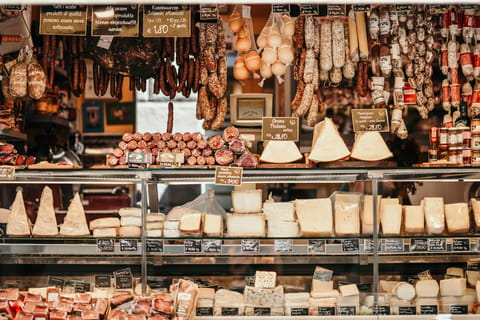
Discover the unique culinary tradition of Bolzano on a street food tour with a local guide. Visit food stalls and sample street food as you stroll through the historic...