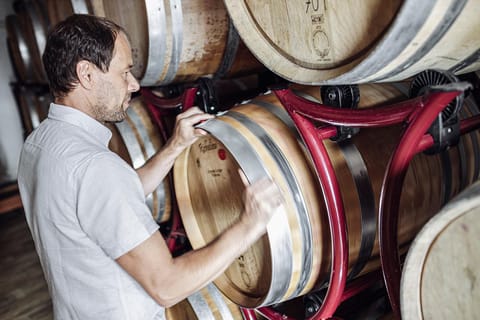
Bolzano: Loacker Wine Experience with Tasting
Discover the world of Loacker wines on a guided tour in Bolzano. Explore the vineyards, visit the barrel cellar, and enjoy a tasting of 6 wines at the panoramic SKYWIN...
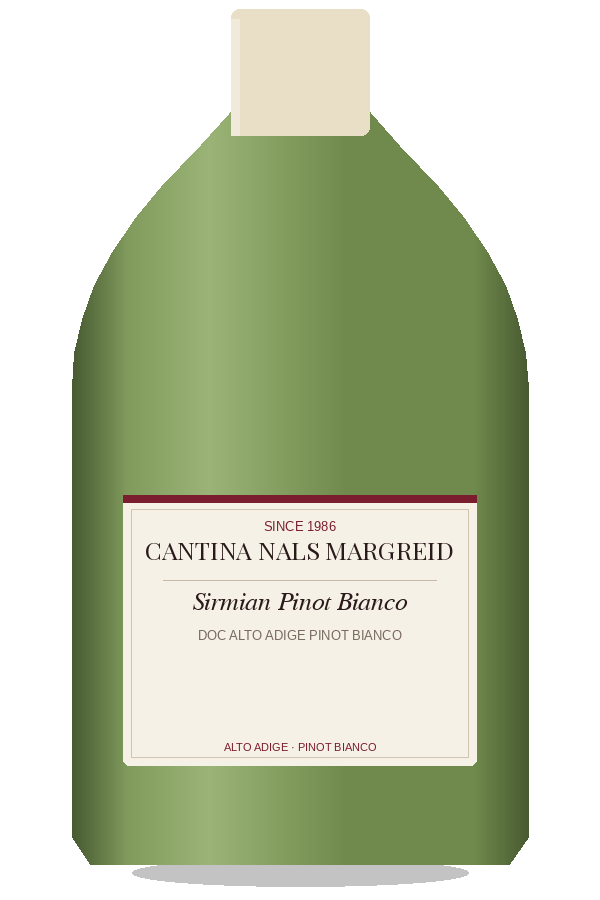 Pale gold
Still White · DOC Alto Adige Pinot Bianco · Alto Adige
Cantina Nals Margreid's flagship single-vineyard Pinot Bianco from the Sirmian terraces above Nalles at 500-700 metres on limestone, gneiss, mica, slate and marble soils with porphyry bedrock. Hand-harvested in mid-October; named Italian white wine of the year by Gambero Rosso.
No critic score is published for this bottle that we can cite with a reviewer, a vintage and a review year, so none is shown. The rating in the header is our own.
Aroma: apple, citrus, ripe pineapple, complex mineral
Palate: extraordinary minerality, incredible fullness, bold acidity, fresh racy finish
Cantina Nals Margreid's flagship single-vineyard Pinot Bianco from the Sirmian terraces above Nalles at 500-700 metres on limestone, gneiss, mica, slate and marble soils with porphyry bedrock. Hand-harvested in mid-October; named Italian white wine of the year by Gambero Rosso.
Cantina Nals Margreid developed Sirmian as the cellar's flagship single-vineyard Pinot Bianco in the mid-1980s. The Sirmian vineyard sits above Nalles at 500-700 metres on a complex mineral soil mix; the wine was named Italian white wine of the year by Gambero Rosso, cementing its position.
Apple, citrus, ripe pineapple and complex mineral notes on the nose; extraordinary minerality, incredible fullness, bold acidity and a fresh racy finish on the palate. Full-bodied with high acidity.
Drink between 4 and 18 years from vintage. Young vintages show vibrant fruit and minerality; cellared bottles develop honey, hazelnut and pronounced saline character.
Above Nalles on steep south-east facing slopes at 500-700 metres altitude. The soil combines limestone, gneiss, mica, slate and marble with morainic deposits over porphyry bedrock.
Gambero Rosso named Sirmian Italian white wine of the year, cementing its position among the regional Pinot Bianco references alongside Vorberg.
Discover the world of Loacker wines on a guided tour in Bolzano. Explore the vineyards, visit the barrel cellar, and enjoy a tasting of 6 wines at the panoramic SKYWIN...

Visit Verona and the Valpolicella wine region on a full-day tour. Enjoy a guided walking tour of Verona, taste Amarone and Valpolicella wines at a family-run winery, a...
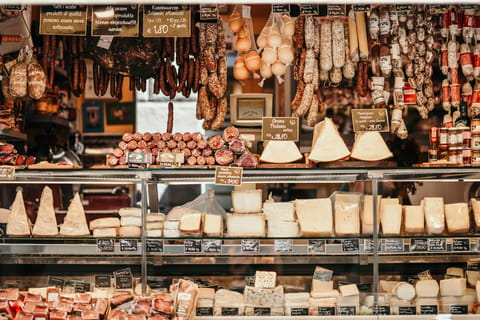
Discover the unique culinary tradition of Bolzano on a street food tour with a local guide. Visit food stalls and sample street food as you stroll through the historic...