Bouillabaisse with Cassis Blanc
The textbook Marseille pairing: bouillabaisse, the saffron-rich rockfish stew of the Vieux Port, has been served with Cassis Blanc from Cap Canaille for generations.
What to eat with the wines of Provence, and where the region's food and wine meet.
What to eat with the wines of Provence, and where the region food and wine meet.
The textbook Marseille pairing: bouillabaisse, the saffron-rich rockfish stew of the Vieux Port, has been served with Cassis Blanc from Cap Canaille for generations.
The Provencal alternative to the white-wine pairing: Mourvedre-led Bandol Rose has the body and savoury structure to carry rouille and saffron without flattening the rockfish broth.
Daube provencale, the slow-cooked Provencal beef stew braised in red wine with orange peel and herbs, finds a peer in mature Bandol: Mourvedre's iron grip and dried-herb register match the long-cooked fat, and the wine's tannin and acidity reset the palate between bites.
Pissaladiere, the slow-caramelised onion, anchovy and olive tart from old Nice, is the local match for Bellet Rose: the AOC sits on the hills above the city, and the wine's Folle Noire-led red-fruit and salt cut anchovy brine and onion sweetness in the same breath. A pairing that never leaves the postcode.
Socca, the wood-oven chickpea pancake sold by the slice along the Cours Saleya, asks for Bellet Blanc, the AOC's Rolle-led white grown on the hills directly above the Old Town.
The grand aioli, the Provencal Friday platter of cold poached cod, boiled vegetables and garlic mayonnaise, sits inside Chateau Simone's Clairette-led Palette Blanc: the wine's beeswax and dried-herb register meets the aioli's raw garlic head-on, and its saline length cuts the egg-yolk richness without flattening the cod.
Pan bagnat, the Niçoise salad packed into an olive-oil-soaked roll with tuna, anchovy, egg and tomato, is summer-on-the-beach food, and pale Cotes de Provence Rose is its straight match: the wine's stone-fruit, citrus and saline finish handles anchovy brine and oily fish without ever competing for the palate.
Soupe au pistou, the Provencal summer vegetable soup finished at the table with a pestle-pounded basil, garlic and olive-oil paste, calls for a fresh inland white: Coteaux d'Aix Blanc, Rolle-led with a touch of Clairette, brings the herbal-citrus lift the pistou demands without weighing down the brothy soup.

Discover Aix en Provence, admire the famous Place de la Rotonde, visit the old historic center and take time for lunch in a local restaurant. Then stop at a vineyard t...
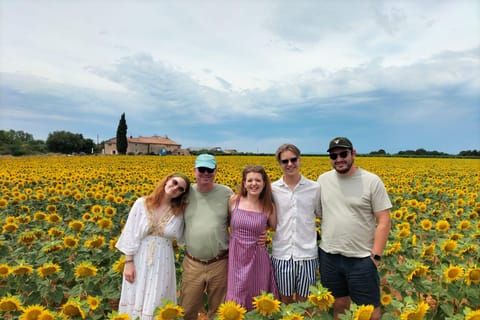
There are many food tours in Aix with a huge choice of boutiques..but also many people, noise, rush... If you prefer to get out of the city, live a peaceful, local exp...

Let me share my Provence with you: explore Sainte-Victoire vineyards, taste exceptional rosé wines, enjoy a gourmet picnic prepared by me and experience authentic mome...
Peak wine-travel season in Provence is spring through autumn, with harvest the standout window.
classified-growth and grand-cru estates require booking days to weeks ahead; smaller family domaines often take walk-ins midweek.
most estates open 10:00 to 17:00 by appointment, often closed Sunday and Monday.
tipping is not expected at tastings; buying a bottle from the cellar door is the customary thank-you.
Ask the next local you meet what they would order. Provence rewards trust.