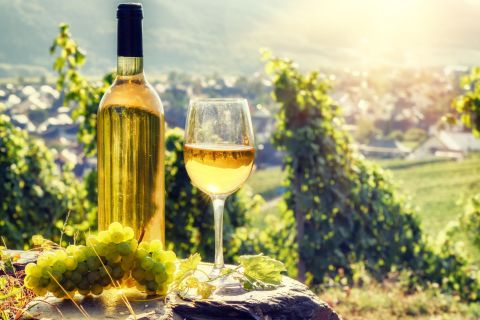
Alsace Half-Day Wine Tour from Strasbourg
Depart from Strasbourg on a half-day tour along the Alsace wine route to discover some of the best wines of France. Visit 2 wineries, learn about the 7 types of Alsace wines.
 Straw to light gold
Still White · Alsace AOC · Alsace
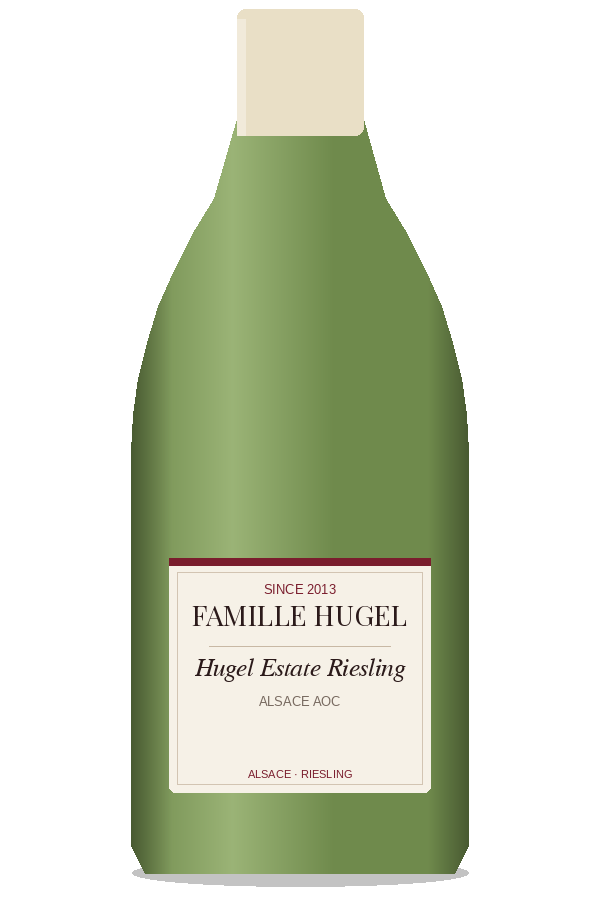
Estate-only Riesling from the family's holdings in Riquewihr and Zellenberg, bottled dry and unoaked. Hugel's mid-tier Riesling.
No critic score is published for this bottle that we can cite with a reviewer, a vintage and a review year, so none is shown. The rating in the header is our own.
Allow 5 minutes from open to pour.
Hugel restructured their range in 2013 into Estate, Grossi Laue and the Schoelhammer pinnacle. Estate Riesling sources entirely from the family's own holdings rather than buying in fruit.
Structurally medium-bodied, high acidity with a long finish. Estate-only Riesling from the family's holdings in Riquewihr and Zellenberg, bottled dry and unoaked. Hugel's mid-tier Riesling.
Drink 2-10 from vintage. Young vintages benefit from 30-90 minutes of decanting; mature bottles should be handled carefully for sediment.
Tarte flambee is the canonical pairing. Other strong matches include Steamed bass and Sushi. Cream-and-bacon flatbread cut by Riesling's bright acid.
The blend is Riesling (100%). The wine is classified as Alsace AOC.
Depart from Strasbourg on a half-day tour along the Alsace wine route to discover some of the best wines of France. Visit 2 wineries, learn about the 7 types of Alsace wines.
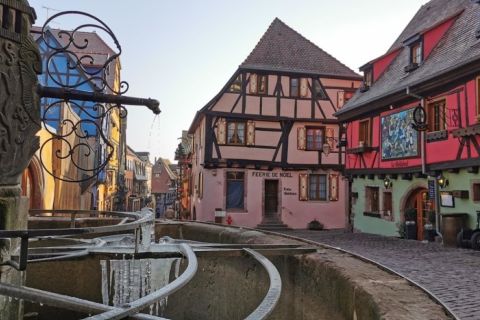
Experience half a day on the famous wine road of Alsace to visit Hunawihr, Riquewihr, and a winemaker cellar with wine tasting! This is the perfect way to get an overv...
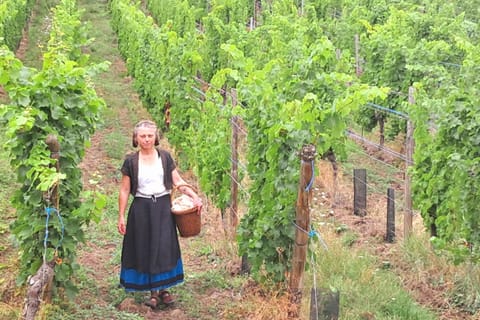
Authentic Alsatian immersion in picturesque Riquewihr - with the option of wine tasting - accompanied by a costumed local character. Where Alsatian history and tradition meet.