The grapes that define Alsace: the canonical varietals and how the region expresses them.
Canonical grapes of Alsace
The most-planted variety across Alsace's 51 Grands Crus. Steely, mineral and bone-dry in the classical Trimbach idiom of Ribeauville, denser and stonier on the granite of Schlossberg and Brand, and capable of late-harvest Vendanges Tardives and botrytised Selection de Grains Nobles in warm years. The Schoenenbourg of Riquewihr and the volcanic Rangen of Thann are notable single-vineyard expressions, while Trimbach's Clos Sainte-Hune at Rosacker is a long-standing dry-Riesling touchstone.
Alsace's lychee-and-rose grape, a pink-skinned mutation of Traminer and a key variety for the region's botrytised Selections de Grains Nobles.
Formerly labelled Tokay d'Alsace until the EU phased the name out in 2007, Alsace's Pinot Gris bears almost no resemblance to Italian Pinot Grigio.
Two distinct varieties travel under the Muscat d'Alsace name: the fragrant Muscat Blanc a Petits Grains and the earlier-ripening Muscat Ottonel.
Long Alsace's workhorse white, Sylvaner found its dignity in 2005 when the Zotzenberg above Mittelbergheim was granted Grand Cru status, the only Alsace Grand Cru where Sylvaner is permitted.
Two genetically distinct grapes share a single Alsace label: Pinot Blanc and the rounder, lower-acid Auxerrois. Together they form the backbone of Cremant d'Alsace and the bulk of the affordable Edelzwicker and Klevner blends. Still bottlings from Josmeyer, Albert Mann and Weinbach show the variety stretched well beyond its everyday role.
Alsace's only red, planted on every cooler-climate slope from Marlenheim to Thann. Long the source of pale, light-bodied wines and rose, Pinot Noir has been taken increasingly seriously since the 1990s and was finally admitted to three Grands Crus by a 2022 INAO reform: Hengst at Wintzenheim, Kirchberg de Barr and Vorbourg at Rouffach. Marcel Deiss, Albert Mann and Mure now bottle Pinot Noir that competes with Burgundy at fine-wine prices.
A tiny niche: the Savagnin Rose B grape, allowed only in five Bas-Rhin communes around Heiligenstein under the Klevener de Heiligenstein appellation since 1971. Around 70 hectares total.
Book wine experiences in Alsace
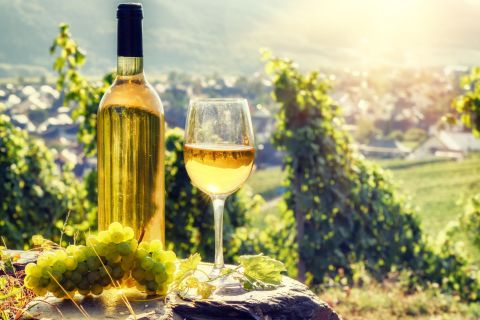
Day trip4 hours4.8 from 379 reviewsfrom €130
Depart from Strasbourg on a half-day tour along the Alsace wine route to discover some of the best wines of France. Visit 2 wineries, learn about the 7 types of Alsace wines.
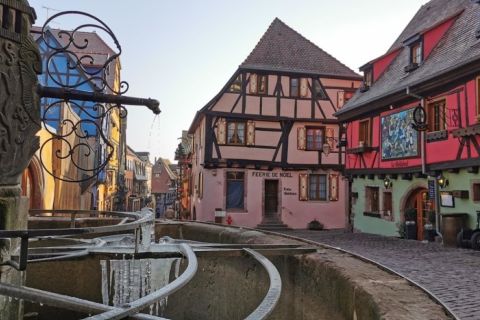
Day trip3h 30m4.8 from 65 reviewsfrom €99
Experience half a day on the famous wine road of Alsace to visit Hunawihr, Riquewihr, and a winemaker cellar with wine tasting! This is the perfect way to get an overv...
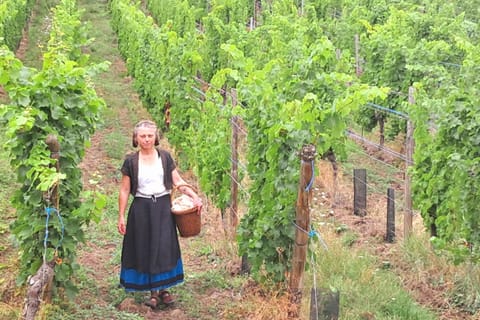
Guided tour2 hours4.6 from 25 reviewsfrom €32
Authentic Alsatian immersion in picturesque Riquewihr - with the option of wine tasting - accompanied by a costumed local character. Where Alsatian history and tradition meet.
See all 655 bookable experiences in Alsace
Signature Grapes in Alsace, FAQ
When is the best time to visit Alsace for wine?
Peak wine-travel season in Alsace is spring through autumn, with harvest the standout window.
Do I need an appointment to taste at Alsace estates?
classified-growth and grand-cru estates require booking days to weeks ahead; smaller family domaines often take walk-ins midweek.
What hours do Alsace cellars and tasting rooms keep?
most estates open 10:00 to 17:00 by appointment, often closed Sunday and Monday.
How does tipping work at Alsace tastings?
tipping is not expected at tastings; buying a bottle from the cellar door is the customary thank-you.
What is the one wine to try in Alsace?
Ask the next local you meet what they would order. Alsace rewards trust.