
Montpellier Wine and Oyster Tour
In a typically Mediterranean landscape, discover two of the region’s greatest treasures on this unforgettable half-day experience combining fine wines, fresh oysters, ...
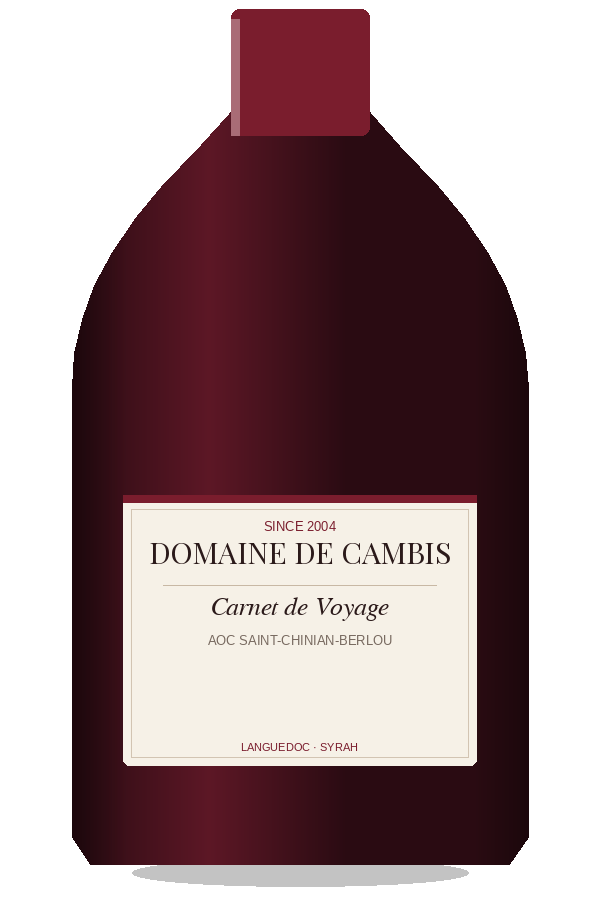 Deep garnet
Still Red · AOC Saint-Chinian-Berlou · Languedoc
Wild Syrah-led Berlou schist cuvée; a micro-production of about 1,200 bottles in the best vintages. Sweet spice from the Orient and the New World.
No critic score is published for this bottle that we can cite with a reviewer, a vintage and a review year, so none is shown. The rating in the header is our own.
Aroma: sweet spice, ripe dark fruit, toasted notes
Palate: round, sensual, dark fruit, cocoa, garrigue, elegant finish
Wild Syrah-led Berlou schist cuvée; a micro-production of about 1,200 bottles in the best vintages. Sweet spice from the Orient and the New World.
The Perolari family acquired Cambis in 2002 and undertook major vineyard restructuring; the first cuvées were signed in 2004 after leaving the cooperative. Martin Perolari took over operations in 2019. Carnet de Voyage is the estate's finest, only produced in the best vintages.
Sweet spice, ripe dark fruit and toasted notes on the nose; round, sensual dark fruit, cocoa, garrigue and an elegant finish on the palate. Full-bodied with a long finish.
Drink between 4 and 12 years from vintage. The wine benefits from 60-90 minutes of decanting in younger vintages.
Slow-braised lamb tagine with prunes is the canonical match; wild boar civet and aged Manchego also work well.
AOC Saint-Chinian-Berlou, the Berlou cru sub-zone within Saint-Chinian, defined by its schist soils.
In a typically Mediterranean landscape, discover two of the region’s greatest treasures on this unforgettable half-day experience combining fine wines, fresh oysters, ...

Discover the wines of Languedoc with a tasting and a fun wine quiz 5:30 PM - 7:30 PM
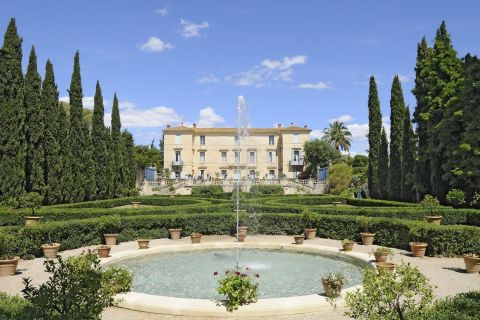
During this tour you will visit two wine estate châteaux and taste their excellent range of wines.