
Montpellier Wine and Oyster Tour
In a typically Mediterranean landscape, discover two of the region’s greatest treasures on this unforgettable half-day experience combining fine wines, fresh oysters, ...
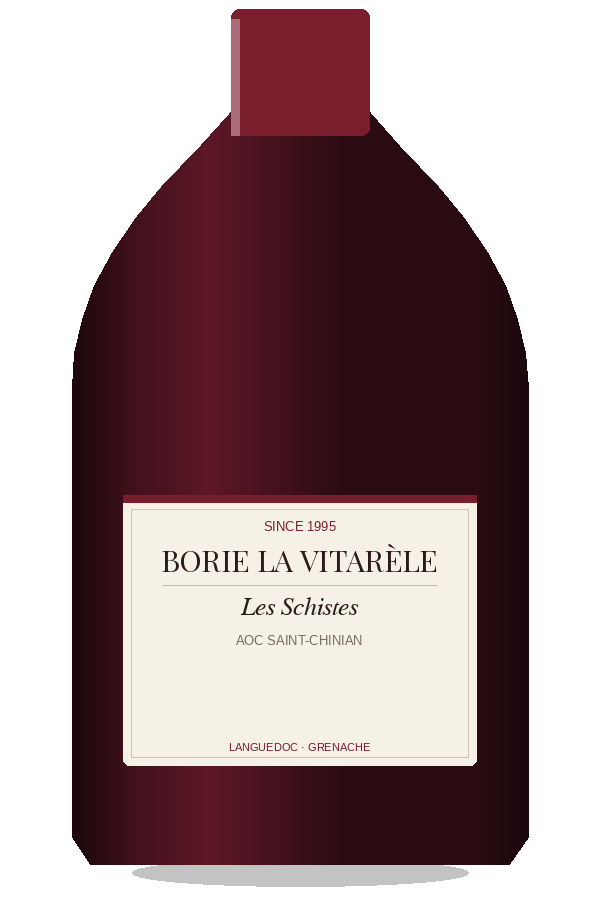 Ruby, medium depth
Still Red · AOC Saint-Chinian · Languedoc
Grenache-led Saint-Chinian from biodynamic schist parcels at altitude on steep hillsides. Velvety mouthfeel despite concentration and character.
| Critic | Vintage | Score |
|---|---|---|
| RVF reviewed 2025 | 2022 | 93/100 |
Scores as published by each critic for the vintage shown.
Aroma: toasted notes, spice, chocolate, garrigue
Palate: dark fruit, thyme, incomparable velvet, fine tannin
Grenache-led Saint-Chinian from biodynamic schist parcels at altitude on steep hillsides. Velvety mouthfeel despite concentration and character.
Borie la Vitarèle was founded in 1990 by Jean-François and Cathy Izarn, 18 hectares in AOC Saint-Chinian under organic and biodynamic farming since 1998. Les Schistes comes from old vines on very steep hillsides at relatively high altitudes.
Toasted notes, spice, chocolate and garrigue on the nose; dark fruit, thyme, incomparable velvet and fine tannin on the palate. Medium-bodied with a long finish.
Drink between 3 and 12 years from vintage. The biodynamic schist cuvée rewards 45-60 minutes of decanting.
Grilled red meat is the canonical match; slow-roasted lamb shoulder and aged Manchego also work well.
From very steep biodynamic hillside parcels at altitude on Berlou-side schist at Borie la Vitarèle in Saint-Chinian.
In a typically Mediterranean landscape, discover two of the region’s greatest treasures on this unforgettable half-day experience combining fine wines, fresh oysters, ...

Discover the wines of Languedoc with a tasting and a fun wine quiz 5:30 PM - 7:30 PM
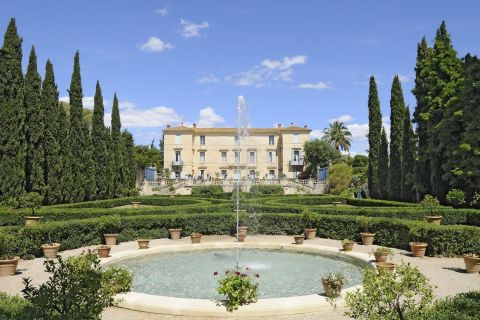
During this tour you will visit two wine estate châteaux and taste their excellent range of wines.