
Montpellier Wine and Oyster Tour
In a typically Mediterranean landscape, discover two of the region’s greatest treasures on this unforgettable half-day experience combining fine wines, fresh oysters, ...
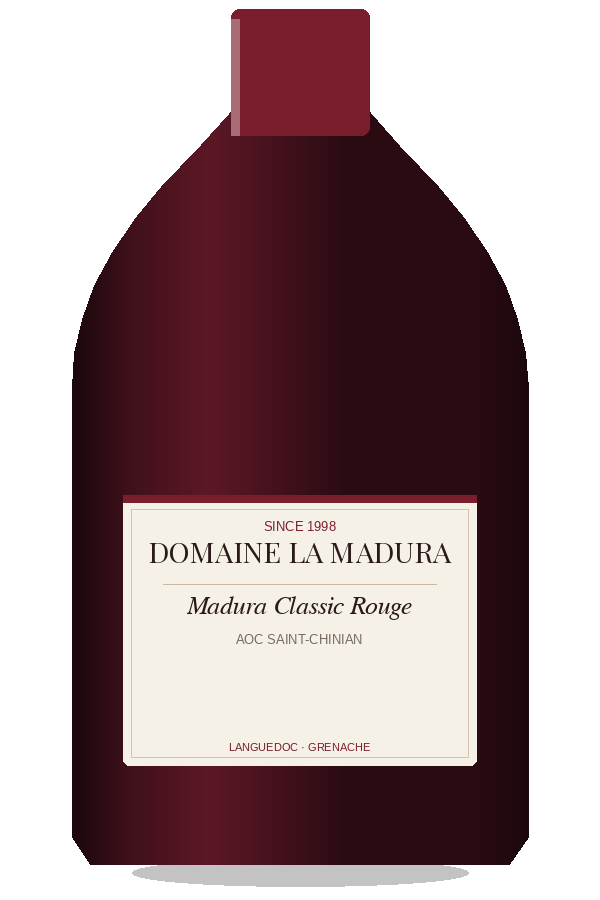 Ruby, medium depth
Still Red · AOC Saint-Chinian · Languedoc
Saint-Chinian Classic from La Madura: Grenache-led with the four traditional appellation varieties. Aromatic complexity and supple tannin.
No critic score is published for this bottle that we can cite with a reviewer, a vintage and a review year, so none is shown. The rating in the header is our own.
Aroma: red and dark fruit, garrigue, thyme, fine spice
Palate: raspberry, blackberry, herbal lift, supple tannin
Saint-Chinian Classic from La Madura: Grenache-led with the four traditional appellation varieties. Aromatic complexity and supple tannin.
Domaine La Madura is the project of Cyril and Nadia Bourgne, who returned to Saint-Chinian after Cyril's career in Saint-Émilion classified châteaux. The Classic is made primarily from the traditional varieties (Grenache and Carignan) for terroir expression. Organic from inception.
Red and dark fruit, garrigue, thyme and fine spice on the nose; raspberry, blackberry, herbal lift and supple tannin on the palate. Medium-bodied with a long finish.
Drink between 3 and 10 years from vintage. The wine is approachable young.
Grilled lamb chops with thyme is the canonical match; a charcuterie board and aged sheep cheese also work well.
48% Grenache, 22% Mourvèdre, 19% Carignan, 11% Syrah - the traditional Saint-Chinian blend, with Grenache and Carignan leading for terroir expression.
In a typically Mediterranean landscape, discover two of the region’s greatest treasures on this unforgettable half-day experience combining fine wines, fresh oysters, ...

Discover the wines of Languedoc with a tasting and a fun wine quiz 5:30 PM - 7:30 PM
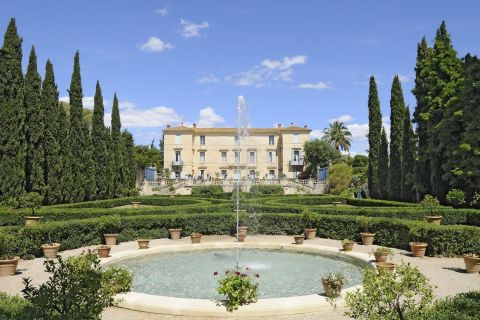
During this tour you will visit two wine estate châteaux and taste their excellent range of wines.