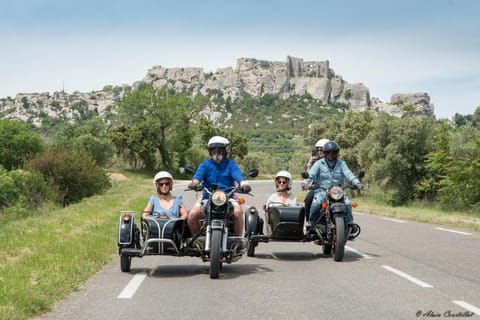
From Aix-en-Provence: Half-day Sidecar Wine Tour
Leave Aix-en-Provence aboard a vintage sidecar and discover the legendary Sainte-Victoire mountain, Cézanne’s muse, along with charming villages and local wine tastings.
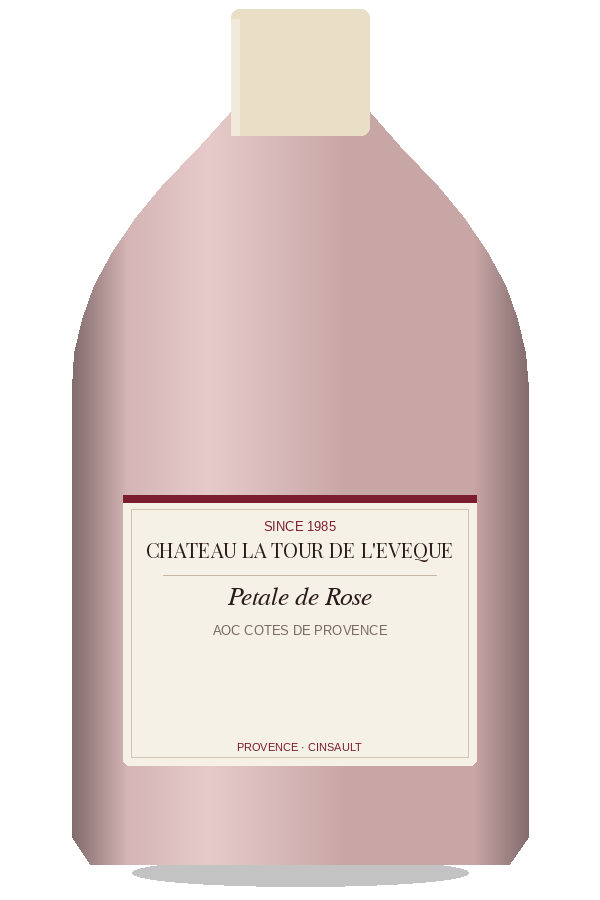 Pale salmon pink
Still Rose · AOC Cotes de Provence · Provence
Cinsault-led Provencal rose from organic-farmed La Tour de l'Eveque. Bottled in the estate's distinctive blue glass; pale, fresh and reliable.
No critic score is published for this bottle that we can cite with a reviewer, a vintage and a review year, so none is shown. The rating in the header is our own.
Aroma: wild strawberry, white peach, pink pepper, rose petal
Palate: red currant, lemon zest, saline, tangerine peel
Cinsault-led Provencal rose from organic-farmed La Tour de l'Eveque. Bottled in the estate's distinctive blue glass; pale, fresh and reliable.
Regine Sumeire took over La Tour de l'Eveque in 1973 and bottled the first Petale de Rose in the mid-1980s in distinctive blue glass. The blue-glass bottle became a visual signature for the cuvee on international wine lists.
Wild strawberry, white peach, pink pepper and rose petal on the nose; red currant, lemon zest, saline and tangerine peel on the palate. Medium-bodied with high acidity and a long saline finish.
Drink between 1 and 4 years from vintage. The cuvee shows well from release through year 3.
Yes. The estate does not use animal-derived fining agents and is certified organic.
Pissaladiere is the canonical pairing. Salade nicoise, grilled white fish with lemon and cheese souffle are equally strong matches.
Regine Sumeire chose blue glass in the mid-1980s as a visual signature to differentiate Petale de Rose from competitor brands; the bottle remains the cuvee's identifier on shelves.
Leave Aix-en-Provence aboard a vintage sidecar and discover the legendary Sainte-Victoire mountain, Cézanne’s muse, along with charming villages and local wine tastings.
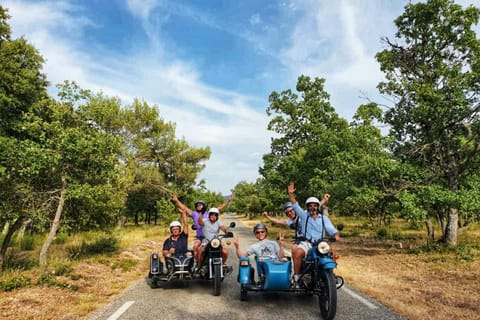
Cruise through Provence in a vintage sidecar, soak in Cézanne’s landscapes, and enjoy a chilled glass of wine at a local vineyard.
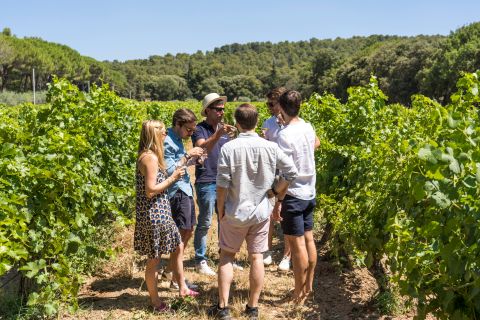
Experience the Provençal lifestyle with this tour from Aix-en-Provence. Start your day by savoring the wines of Côtes de Provence. In the afternoon, explore some of Lu...