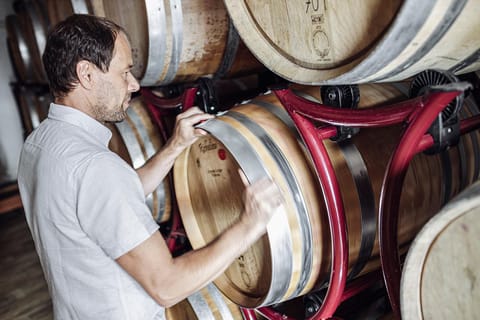
Bolzano: Loacker Wine Experience with Tasting
Discover the world of Loacker wines on a guided tour in Bolzano. Explore the vineyards, visit the barrel cellar, and enjoy a tasting of 6 wines at the panoramic SKYWIN...
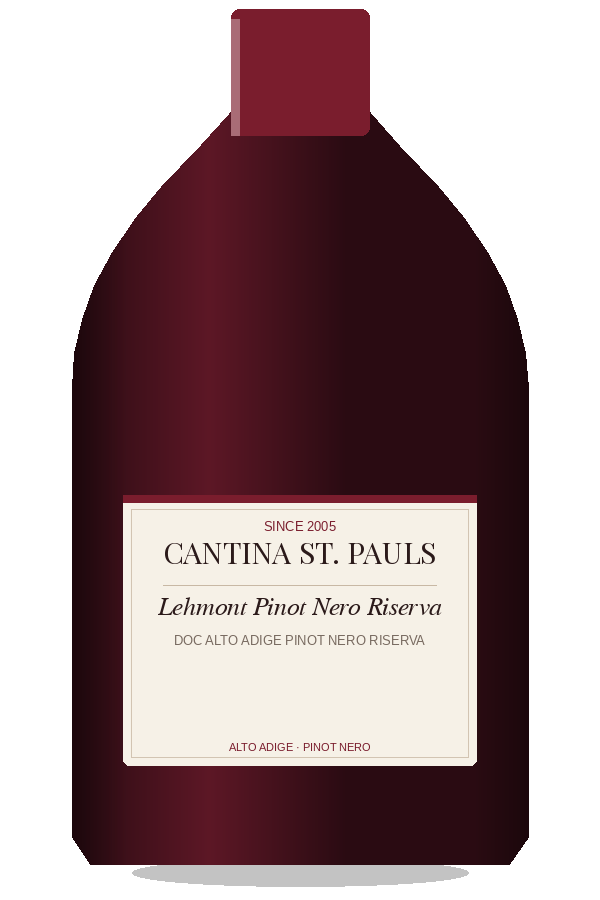 Ruby, medium depth
Still Red · DOC Alto Adige Pinot Nero Riserva · Alto Adige
Cantina St. Pauls's Riserva-line Pinot Nero. The name combines 'Lehm' (clay) and 'Mont' (mountain) - indicating the soil and altitude that form the wine. Decisive and persistent finish with classic Pinot Nero structure.
No critic score is published for this bottle that we can cite with a reviewer, a vintage and a review year, so none is shown. The rating in the header is our own.
Aroma: small red and dark berries, black cherry, plum, blood orange
Palate: good structure, delicate tannins, dried herbs, cloves on finish
Cantina St. Pauls's Riserva-line Pinot Nero. The name combines 'Lehm' (clay) and 'Mont' (mountain) - indicating the soil and altitude that form the wine. Decisive and persistent finish with classic Pinot Nero structure.
Cantina St. Pauls's Lehmont Pinot Nero Riserva captures the cellar's Pinot Noir character from clay-rich soils at altitude. The name (Lehm-Mont) references the soil and mountain that define the wine.
Small red and dark berries, black cherry, plum and blood orange on the nose; good structure, delicate tannins, dried herbs and cloves on the finish. Medium-bodied, dry, with high acidity.
Drink between 5 and 18 years from vintage. Young vintages show vibrant berry and orange notes; cellared bottles develop forest-floor and complex savoury depth.
The name combines 'Lehm' (German for clay) and 'Mont' (mountain), referencing the clay-rich soils and the mountain altitude that form the wine's character.
Discover the world of Loacker wines on a guided tour in Bolzano. Explore the vineyards, visit the barrel cellar, and enjoy a tasting of 6 wines at the panoramic SKYWIN...

Visit Verona and the Valpolicella wine region on a full-day tour. Enjoy a guided walking tour of Verona, taste Amarone and Valpolicella wines at a family-run winery, a...
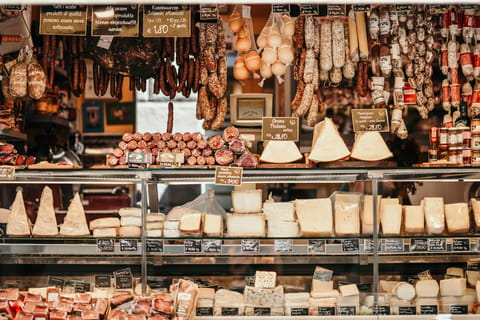
Discover the unique culinary tradition of Bolzano on a street food tour with a local guide. Visit food stalls and sample street food as you stroll through the historic...