
Montpellier Wine and Oyster Tour
In a typically Mediterranean landscape, discover two of the region’s greatest treasures on this unforgettable half-day experience combining fine wines, fresh oysters, ...
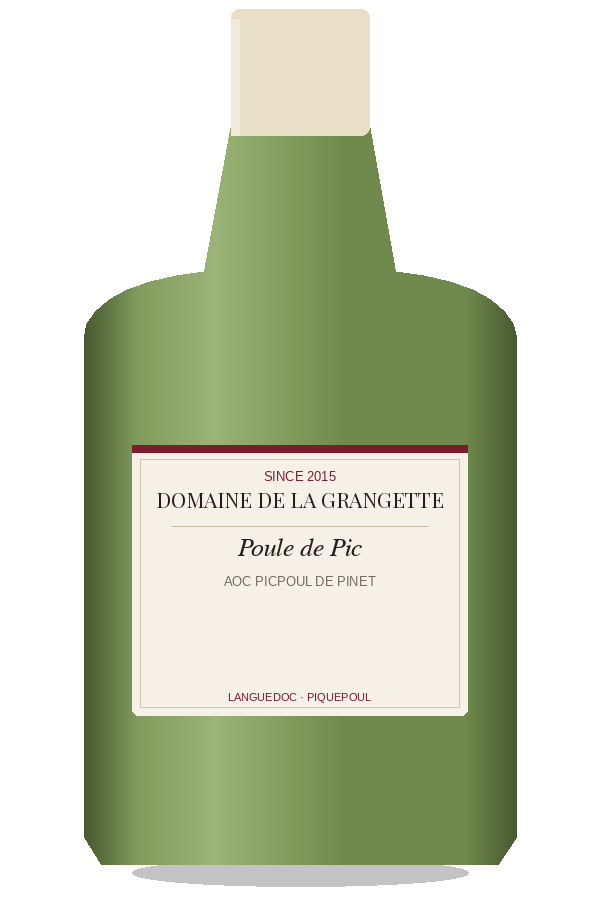 Straw to light gold
Still White · AOC Picpoul de Pinet · Languedoc
Sea-scented Picpoul from Domaine la Grangette, named with a tongue-in-cheek 'pecking hen' pun on Picpoul. Salinity, fresh, floral, citrus-driven.
No critic score is published for this bottle that we can cite with a reviewer, a vintage and a review year, so none is shown. The rating in the header is our own.
Aroma: lemon zest, tangerine, white flowers, sea breeze
Palate: citrus, salinity, crisp, pure refreshing finish
Sea-scented Picpoul from Domaine la Grangette, named with a tongue-in-cheek 'pecking hen' pun on Picpoul. Salinity, fresh, floral, citrus-driven.
Christelle and Matthieu Caron own Domaine La Grangette. Poule de Pic is a tongue-in-cheek take on Picpoul de Pinet, labelled as a pecking hen picking at feed. The estate is between Bassin de Thau and Pézenas; organic agriculture.
Lemon zest, tangerine, white flowers and sea breeze on the nose; citrus, salinity, crisp acidity and a pure refreshing finish on the palate. Medium-bodied with high acidity.
Drink within 1 to 3 years of vintage at 8-10 degrees Celsius. Best young for freshness.
Raw oysters is the canonical match; Sète seafood platter and tabbouleh with fresh herbs also work well.
100% Piquepoul Blanc from Domaine la Grangette's organic parcels on the edge of the Bassin de Thau.
In a typically Mediterranean landscape, discover two of the region’s greatest treasures on this unforgettable half-day experience combining fine wines, fresh oysters, ...

Discover the wines of Languedoc with a tasting and a fun wine quiz 5:30 PM - 7:30 PM
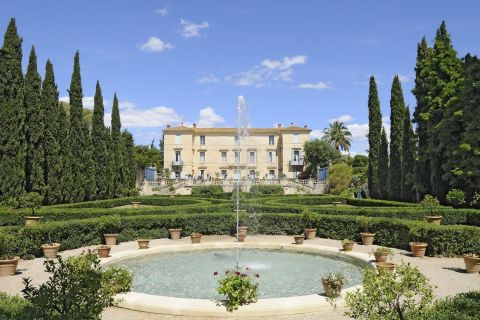
During this tour you will visit two wine estate châteaux and taste their excellent range of wines.