
Bordeaux: Médoc & St-Emilion Wine 3 châteaux with lunch
Tour two mythical wine regions of Médoc and St-Emilion in Bordeaux. Taste wines at 3 wine estates and enjoy a picnic lunch in the garden of a beautiful chateau in St-Emilion.
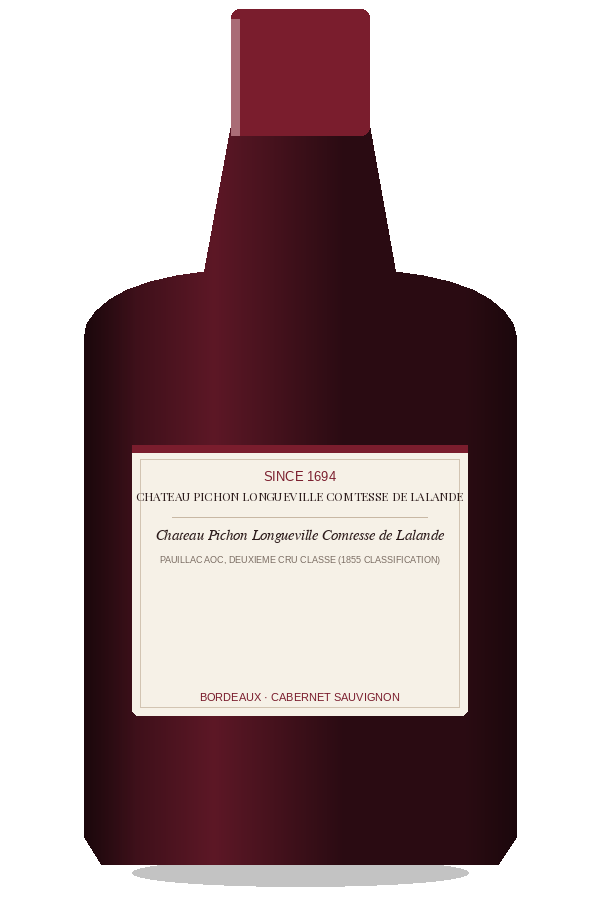 Deep garnet
Still Red · Pauillac AOC, Deuxieme Cru Classe (1855 classification) · Bordeaux
Known for its silky texture and unusually high 32% Merlot for a Left Bank estate, Pichon Lalande bridges the power of Pauillac with a suppleness and perfume reminiscent of Margaux. Louis Roederer ownership since 2006 has brought further precision.
| Critic | Vintage | Score |
|---|---|---|
| Wine Advocate reviewed 2022 | 2019 | 98/100 |
| Wine Advocate reviewed 2025 | 2022 | 100/100 |
Scores as published by each critic for the vintage shown.
Aroma: cassis, tobacco, violets, earth, pencil shavings, dark plum
Palate: pure cassis, blackcurrant, chocolate, menthol, charcoal, silk texture
Known for its silky texture and unusually high 32% Merlot for a Left Bank estate, Pichon Lalande bridges the power of Pauillac with a suppleness and perfume reminiscent of Margaux. Louis Roederer ownership since 2006 has brought further precision.
Allow 95 minutes from open to pour.
The Pichon estate was divided in 1850 between Baron and Comtesse heirs. The Comtesse half, facing the Chateau Latour vineyards from across the road, was purchased by the Miailhe family and rose to international fame under May-Eliane de Lencquesaing's direction from 1978 to 2006. Louis Roederer Champagne acquired it in 2006.
On the nose, cassis, tobacco, violets, earth, pencil shavings. On the palate, pure cassis, blackcurrant, chocolate, menthol, charcoal. Structurally full-bodied, firm tannins, high acidity with a long, precise and silky finish. Known for its silky texture and unusually high 32% Merlot for a Left Bank estate, Pichon Lalande bridges the power of Pauillac with a suppleness and perfume reminiscent of Margaux. Louis Roederer ownership since 2006 has brought further precision.
Drink 10-40 from vintage. Young vintages benefit from 30-90 minutes of decanting; mature bottles should be handled carefully for sediment.
Roast pigeon with black truffle sauce is the canonical pairing. Other strong matches include Rack of lamb with rosemary jus and Aged Mimolette or Comté. The wine's silky texture and tobacco-truffle notes mirror the delicacy and earthiness of roasted pigeon.
The blend is Cabernet Sauvignon (70%), Merlot (22%), Cabernet Franc (5%), Petit Verdot (3%). The wine is classified as Pauillac AOC, Deuxieme Cru Classe (1855 classification).
Tour two mythical wine regions of Médoc and St-Emilion in Bordeaux. Taste wines at 3 wine estates and enjoy a picnic lunch in the garden of a beautiful chateau in St-Emilion.

Discover the magnificent village of Saint-Emilion on a customized wine tour from Bordeaux. Enjoy an expert tasting in a grand cru château. Stop for photos to capture t...

Explore Bordeaux’s Left Bank on a private tour of the Médoc. Visit iconic wine estates, admire grand architecture, and enjoy sweeping vineyard views.