
Bordeaux: Médoc & St-Emilion Wine 3 châteaux with lunch
Tour two mythical wine regions of Médoc and St-Emilion in Bordeaux. Taste wines at 3 wine estates and enjoy a picnic lunch in the garden of a beautiful chateau in St-Emilion.
 Deep garnet
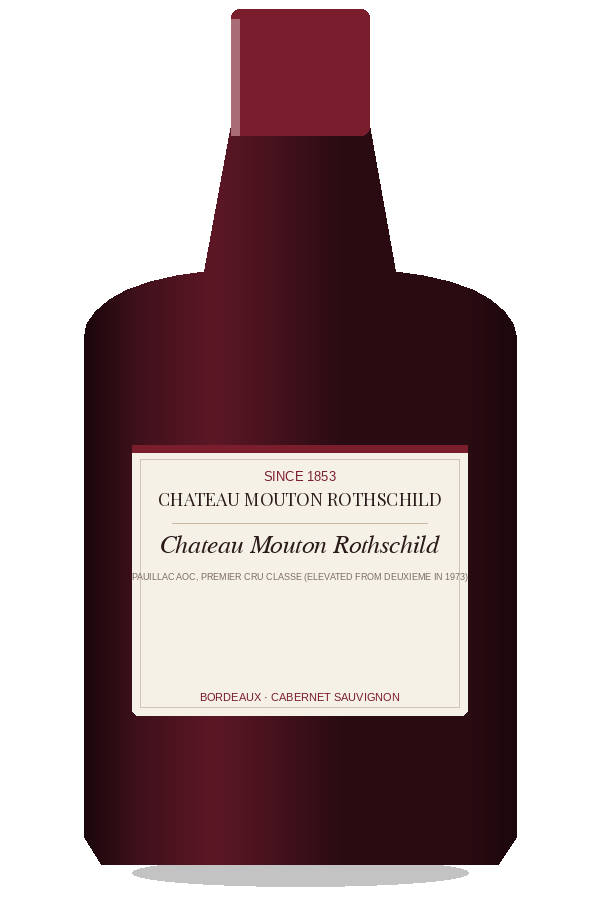
Still Red · Pauillac AOC, Premier Cru Classe (elevated from Deuxieme in 1973) · Bordeaux
The most opulent of the Pauillac first-growths; Mouton Rothschild emphasises blackcurrant concentration, dark chocolate, and an extrovert aromatic generosity that sets it apart from the pencil-mineral restraint of Lafite and Latour.
| Critic | Vintage | Score |
|---|---|---|
| Wine Advocate reviewed 1985 | 1982 | 100/100 |
| Wine Advocate reviewed 2019 | 2016 | 98/100 |
| James Suckling reviewed 2019 | 2016 | 100/100 |
Scores as published by each critic for the vintage shown.
Aroma: crème de cassis, blackcurrant, dark truffle, licorice, crushed stone, cedar
Palate: black fruit, charcoal, tobacco, dark chocolate, lead pencil, graphite
The most opulent of the Pauillac first-growths; Mouton Rothschild emphasises blackcurrant concentration, dark chocolate, and an extrovert aromatic generosity that sets it apart from the pencil-mineral restraint of Lafite and Latour.
Allow 95 minutes from open to pour.
Acquired by Baron Nathaniel de Rothschild in 1853. For over a century classified as a Second Growth, Baron Philippe de Rothschild campaigned for reclassification. In 1973, Mouton Rothschild became the only wine ever to be upgraded in the 1855 classification, from Second to First Growth. Since 1945, each vintage has featured a different label artwork by a renowned artist, a tradition initiated by Philippe de Rothschild.
On the nose, crème de cassis, blackcurrant, dark truffle, licorice, crushed stone. On the palate, black fruit, charcoal, tobacco, dark chocolate, lead pencil. Structurally full-bodied, firm tannins, high acidity with a very long with charcoal and dark berry finish. The most opulent of the Pauillac first-growths; Mouton Rothschild emphasises blackcurrant concentration, dark chocolate, and an extrovert aromatic generosity that sets it apart from the pencil-mineral restraint of Lafite and Latour.
Drink 10-50 from vintage. Young vintages benefit from 30-90 minutes of decanting; mature bottles should be handled carefully for sediment.
Grilled Wagyu ribeye is the canonical pairing. Other strong matches include Roasted rack of lamb with black truffle and Roasted venison with blackcurrant jus. Mouton's powerful dark fruit and ripe tannins match the extraordinary fat content of Wagyu; chocolate tones find an echo in beef's natural glutamates.
The blend is Cabernet Sauvignon (81%), Merlot (16%), Cabernet Franc, Petit Verdot. The wine is classified as Pauillac AOC, Premier Cru Classe (elevated from Deuxieme in 1973).
Tour two mythical wine regions of Médoc and St-Emilion in Bordeaux. Taste wines at 3 wine estates and enjoy a picnic lunch in the garden of a beautiful chateau in St-Emilion.

Discover the magnificent village of Saint-Emilion on a customized wine tour from Bordeaux. Enjoy an expert tasting in a grand cru château. Stop for photos to capture t...

Explore Bordeaux’s Left Bank on a private tour of the Médoc. Visit iconic wine estates, admire grand architecture, and enjoy sweeping vineyard views.