
Wine Tour in Braga with Vinho Verde Tasting and snacks
Wine Tour of the historic area of the city of Braga, which may include a visit to the Monastery of Tibães. Accompanied by a tasting of Vinho Verde wines that are uniqu...
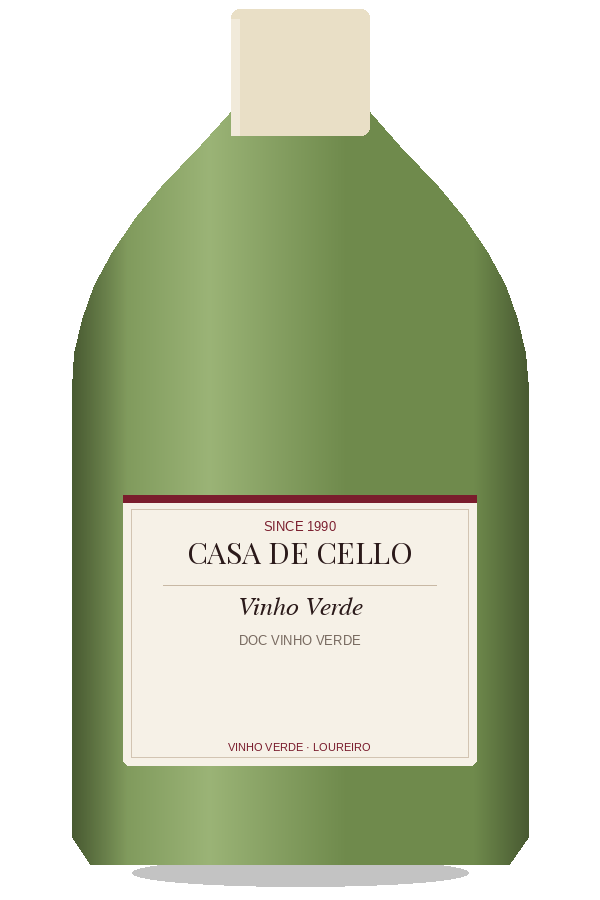 Straw to light gold
Still White · DOC Vinho Verde · Vinho Verde
The Casa de Cello blend from the family's Vinho Verde estate at Santa Cruz do Douro on the Baião sub-region edge: Loureiro and Avesso for an aromatic and weighty Vinho Verde.
No critic score is published for this bottle that we can cite with a reviewer, a vintage and a review year, so none is shown. The rating in the header is our own.
Aroma: bay leaf, lemon peel, pear, wet stone
Palate: citrus, yellow fruit, lees weight, saline close
The Casa de Cello blend from the family's Vinho Verde estate at Santa Cruz do Douro on the Baião sub-region edge: Loureiro and Avesso for an aromatic and weighty Vinho Verde.
Casa de Cello is the wine project of the family at Santa Cruz do Douro, working a 14-hectare Vinho Verde property on the Baião sub-region edge. The estate releases an aromatic blend of Loureiro and Avesso plus a separate Dão project.
Bay leaf, lemon peel, pear and wet stone on the nose; citrus, yellow fruit, lees weight and a saline close on the palate. Medium-bodied with high acidity and a long mineral finish.
The Vinho Verde estate is at Santa Cruz do Douro, on the Baião sub-region edge where Vinho Verde meets the Douro. The family also has a separate Dão project.
Avesso is the signature white grape of the Baião sub-region of Vinho Verde, producing a weightier, slightly higher-alcohol white than Loureiro or Alvarinho with a distinctive yellow-fruit register.
Bacalhau a Gomes de Sa, polvo a lagareiro, grilled hake with lemon and caldo verde. The lees-driven weight handles richer Portuguese dishes.
Wine Tour of the historic area of the city of Braga, which may include a visit to the Monastery of Tibães. Accompanied by a tasting of Vinho Verde wines that are uniqu...

In this experience, you can enjoy a tasting of wines exclusive to the Norte Region of Portugal. In our space, we provide wine tastings customized to your preferences a...

Explore 3,000 years of Portuguese history in Braga, walk a section of the Camino de Santiago in Ponte de Lima, and enjoy Vinho Verde tasting in a 12th-century castle.