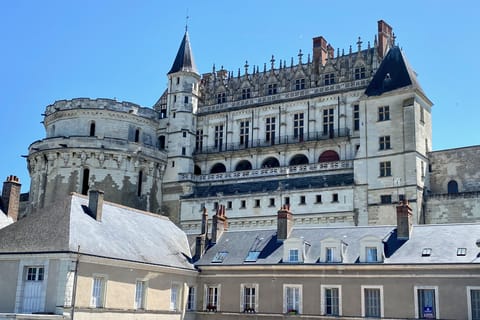
3-day Private Loire Castles Trip 2 Wine tastings by Mercedes
3-day Private tour to Top 7 Loire Valley Castles with 2 Wine tastings. Chenonceau, Amboise, Chambord, Blois, Chaumont, Da Vinci Clos Luce, Villandry by Mercedes. Live ...
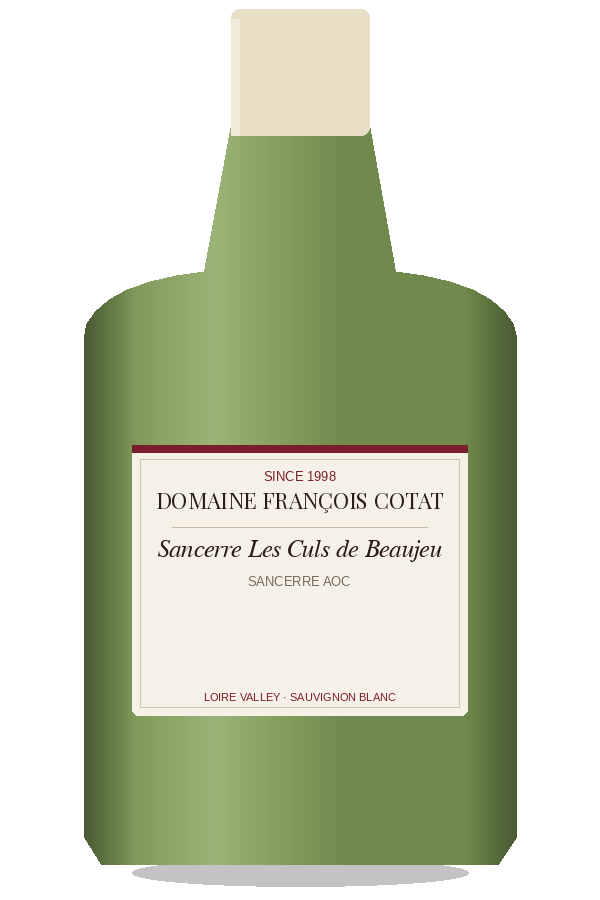 Pale gold
Still White · Sancerre AOC · Loire Valley
The most overtly mineral of Cotat's three single-vineyard bottlings, from a steep 0.7 hectare Chavignol parcel of fossilised pebbles. Rewards 15 years for creamy, saline depth.
| Critic | Vintage | Score |
|---|---|---|
| Wine Advocate reviewed 2022 | 2019 | 94/100 |
Scores as published by each critic for the vintage shown.
Aroma: white peach, grapefruit, stone, white flower
Palate: pear, grapefruit zest, creamy lees, saline texture
The most overtly mineral of Cotat's three single-vineyard bottlings, from a steep 0.7 hectare Chavignol parcel of fossilised pebbles. Rewards 15 years for creamy, saline depth.
Les Culs de Beaujeu sits on an extreme 45 percent slope of fossilised pebbles in Chavignol with south-east exposure. The parcel's structure produces Cotat's longest-lived bottling.
White peach, grapefruit, stone and white flower on the nose; pear, grapefruit zest, creamy lees and saline texture on the palate. Full-bodied with high acidity and a long, mineral finish.
Drink between 3 and 25 years from vintage. The cuvée rewards 15 years in bottle with a creamy, saline texture and white-fruit and grapefruit complexity.
A 0.7 hectare south-east-facing parcel in Chavignol on a 45 percent slope of fossilised pebbles, one of the steepest in Sancerre.
Coquilles Saint-Jacques, aged hard goat cheese, bouillabaisse and roast monkfish are textbook matches; the wine's body and saline texture handle rich shellfish dishes.
3-day Private tour to Top 7 Loire Valley Castles with 2 Wine tastings. Chenonceau, Amboise, Chambord, Blois, Chaumont, Da Vinci Clos Luce, Villandry by Mercedes. Live ...
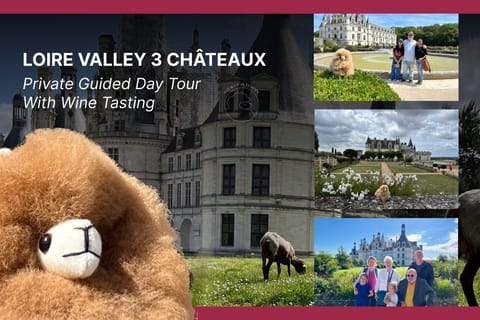
Discover the Loire Valley and visit its three most prestigious castles of your choice on a private guided tour, at your pace, according to your wishes
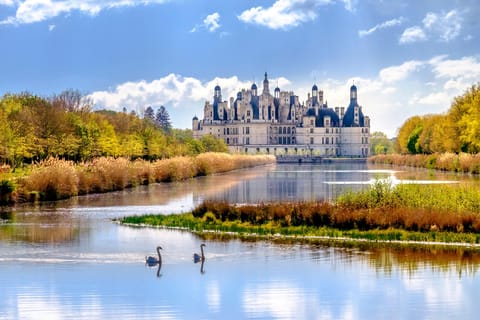
Escape Paris for a magical day in the Loire Valley. Explore fairytale castles, wander charming Blois, and enjoy a local wine tasting along the way.