
Bordeaux: Médoc & St-Emilion Wine 3 châteaux with lunch
Tour two mythical wine regions of Médoc and St-Emilion in Bordeaux. Taste wines at 3 wine estates and enjoy a picnic lunch in the garden of a beautiful chateau in St-Emilion.
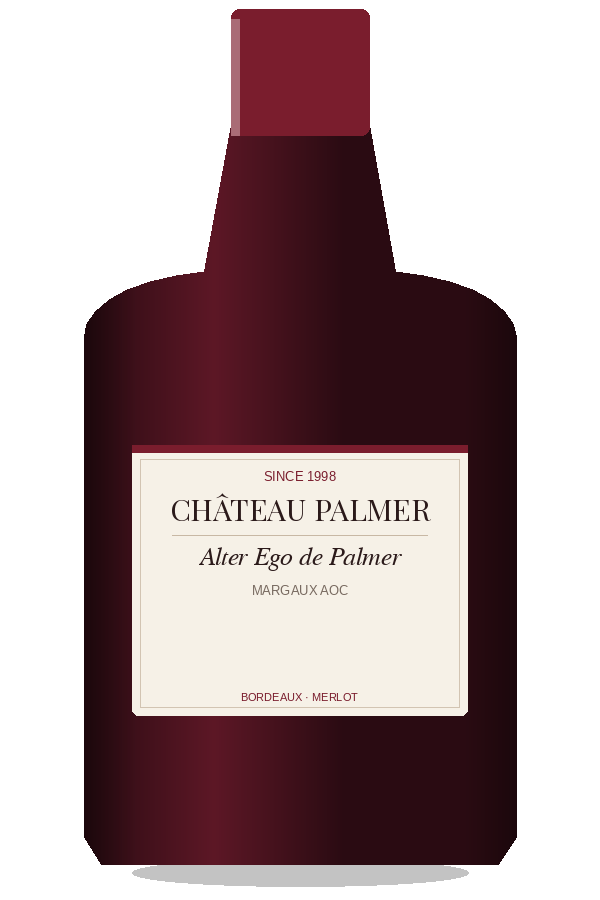 Deep garnet
Still Red · Margaux AOC · Bordeaux
Not a second wine but a distinct cuvée emphasising freshness and fruit intensity over the grand vin's power: Margaux character with more immediate expression, distinguished by its energy and precision.
| Critic | Vintage | Score |
|---|---|---|
| Decanter reviewed 2022 | 2019 | 95/100 |
| Wine Advocate reviewed 2023 | 2020 | 93/100 |
Scores as published by each critic for the vintage shown.
Aroma: cassis, blackberry, violets, crayon, slate
Palate: fresh berry fruit, silky tannins, lively acidity, dark cherry concentration, mineral finish
Not a second wine but a distinct cuvée emphasising freshness and fruit intensity over the grand vin's power: Margaux character with more immediate expression, distinguished by its energy and precision.
Allow 95 minutes from open to pour.
Introduced in 1998, Alter Ego de Palmer was conceived not as a second wine but as a distinct cuvée with its own identity, emphasising freshness of fruit and intensity over the structural ambition of the grand vin. Around 40% of Palmer's production is sold as Alter Ego. It shares the estate's Demeter biodynamic certification.
On the nose, cassis, blackberry, violets, crayon, slate. On the palate, fresh berry fruit, silky tannins, lively acidity, dark cherry concentration, mineral finish. Structurally full-bodied, medium tannins, high acidity with a long finish. Not a second wine but a distinct cuvée emphasising freshness and fruit intensity over the grand vin's power: Margaux character with more immediate expression, distinguished by its energy and precision.
Drink 8-20 from vintage. Young vintages benefit from 30-90 minutes of decanting; mature bottles should be handled carefully for sediment.
Entrecôte with pepper sauce is the canonical pairing. Other strong matches include Roasted duck breast and Lamb shoulder with herbed bulgur. Alter Ego's freshness and fruit intensity cut cleanly through the richness of a peppercorn-sauced steak.
The blend is Merlot, Cabernet Sauvignon, Petit Verdot. The wine is classified as Margaux AOC.
Tour two mythical wine regions of Médoc and St-Emilion in Bordeaux. Taste wines at 3 wine estates and enjoy a picnic lunch in the garden of a beautiful chateau in St-Emilion.

Discover the magnificent village of Saint-Emilion on a customized wine tour from Bordeaux. Enjoy an expert tasting in a grand cru château. Stop for photos to capture t...

Explore Bordeaux’s Left Bank on a private tour of the Médoc. Visit iconic wine estates, admire grand architecture, and enjoy sweeping vineyard views.