
Bordeaux: Médoc & St-Emilion Wine 3 châteaux with lunch
Tour two mythical wine regions of Médoc and St-Emilion in Bordeaux. Taste wines at 3 wine estates and enjoy a picnic lunch in the garden of a beautiful chateau in St-Emilion.
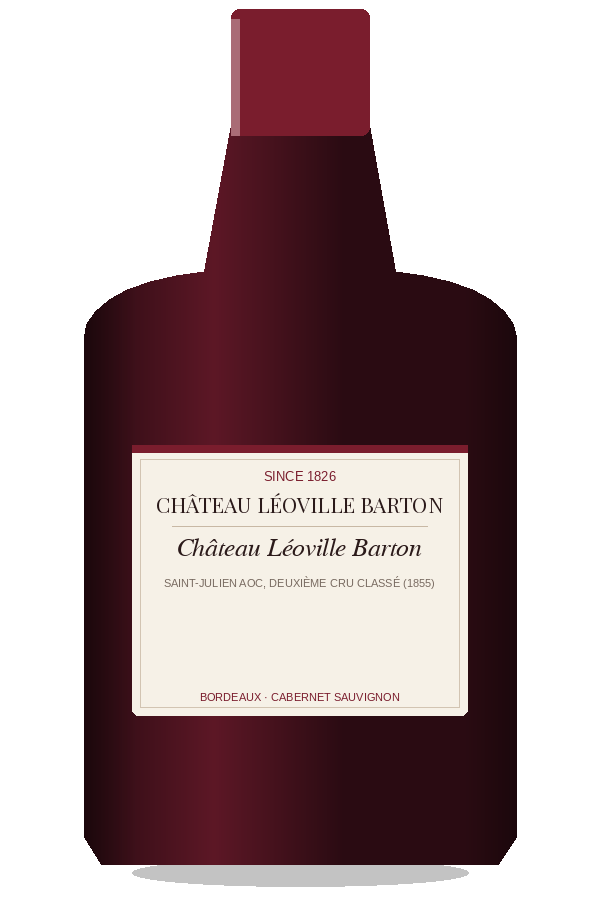 Deep garnet
Still Red · Saint-Julien AOC, Deuxième Cru Classé (1855) · Bordeaux
Timeless Saint-Julien classic: a Cabernet-dominant blend with classic Médoc pencil shavings, licorice and cassis, built for patience with rich powdery tannins.
| Critic | Vintage | Score |
|---|---|---|
| Wine Advocate reviewed 2022 | 2019 | 97/100 |
| Wine Advocate reviewed 2023 | 2020 | 96/100 |
Scores as published by each critic for the vintage shown.
Aroma: blackcurrant, plum, pencil shavings, licorice, cedar
Palate: black cherry, tobacco leaf, cassis, fine powdery tannins, classic Médoc structure
Timeless Saint-Julien classic: a Cabernet-dominant blend with classic Médoc pencil shavings, licorice and cassis, built for patience with rich powdery tannins.
Allow 95 minutes from open to pour.
Hugh Barton purchased Léoville Barton in 1826 as part of the historic Léoville estate division. The Barton family, originally Irish négociants, have maintained unbroken ownership for nearly 200 years, vinifying at the adjacent Château Langoa Barton using traditional wooden fermentation vats dating to 1963.
On the nose, blackcurrant, plum, pencil shavings, licorice, cedar. On the palate, black cherry, tobacco leaf, cassis, fine powdery tannins, classic Médoc structure. Structurally full-bodied, firm tannins, high acidity with a long finish. Timeless Saint-Julien classic: a Cabernet-dominant blend with classic Médoc pencil shavings, licorice and cassis, built for patience with rich powdery tannins.
Drink 10-30 from vintage. Young vintages benefit from 30-90 minutes of decanting; mature bottles should be handled carefully for sediment.
Roast leg of lamb is the canonical pairing. Other strong matches include Braised short rib with sauce bordelaise and Wild duck breast with blackcurrant reduction. The wine's structured tannins and cassis fruit are a textbook match for the minerality of slow-roasted lamb.
The blend is Cabernet Sauvignon (74%), Merlot (23%), Cabernet Franc (3%). The wine is classified as Saint-Julien AOC, Deuxième Cru Classé (1855).
Tour two mythical wine regions of Médoc and St-Emilion in Bordeaux. Taste wines at 3 wine estates and enjoy a picnic lunch in the garden of a beautiful chateau in St-Emilion.

Discover the magnificent village of Saint-Emilion on a customized wine tour from Bordeaux. Enjoy an expert tasting in a grand cru château. Stop for photos to capture t...

Explore Bordeaux’s Left Bank on a private tour of the Médoc. Visit iconic wine estates, admire grand architecture, and enjoy sweeping vineyard views.