
Bordeaux: Médoc & St-Emilion Wine 3 châteaux with lunch
Tour two mythical wine regions of Médoc and St-Emilion in Bordeaux. Taste wines at 3 wine estates and enjoy a picnic lunch in the garden of a beautiful chateau in St-Emilion.
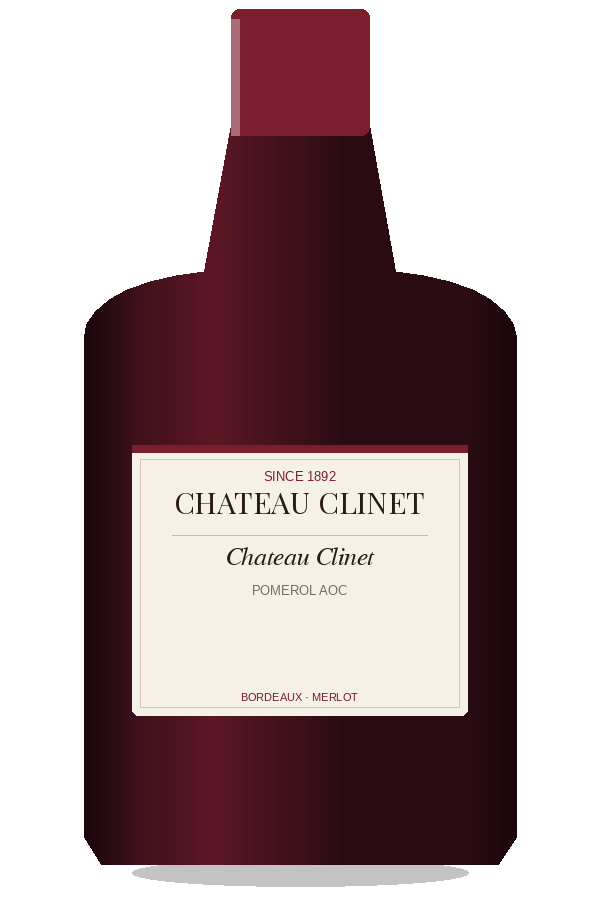 Deep garnet
Still Red · Pomerol AOC · Bordeaux
Merlot-dominant Pomerol with an unusually significant proportion of Cabernet Sauvignon giving structured backbone. Rich and concentrated with cassis, graphite, and leather; requires a minimum of 8-12 years in good vintages.
| Critic | Vintage | Score |
|---|---|---|
| Wine Advocate reviewed 2001 | 1998 | 100/100 |
| Wine Advocate reviewed 2003 | 2000 | 98/100 |
Scores as published by each critic for the vintage shown.
Aroma: cassis, leather, graphite, black cherry, lavender, menthol, crushed rock
Palate: blackberry, sage, dark chocolate, powdery tannins, vibrant acidity, crushed rock
Merlot-dominant Pomerol with an unusually significant proportion of Cabernet Sauvignon giving structured backbone. Rich and concentrated with cassis, graphite, and leather; requires a minimum of 8-12 years in good vintages.
Allow 95 minutes from open to pour.
Old maps record Clinet vines as early as 1785. The estate gained international recognition with the 1998 vintage (see scores array) under the stewardship of the Laborde family. Ronan Laborde acquired the estate in 2004 and has since significantly raised quality. Production stands at approximately 3,200 cases per year from 9 hectares.
On the nose, cassis, leather, graphite, black cherry, lavender. On the palate, blackberry, sage, dark chocolate, powdery tannins, vibrant acidity. Structurally full-bodied, firm tannins, high acidity with a long finish. Merlot-dominant Pomerol with an unusually significant proportion of Cabernet Sauvignon giving structured backbone. Rich and concentrated with cassis, graphite, and leather; requires a minimum of 8-12 years in good vintages.
Drink 8-35 from vintage. Young vintages benefit from 30-90 minutes of decanting; mature bottles should be handled carefully for sediment.
Entrecote with bone marrow and shallot sauce is the canonical pairing. Other strong matches include Wild boar or venison with berry sauce and Roasted lamb shoulder with flageolet beans. Firm tannins cut through marrow richness; cassis and graphite bring classical Bordeaux affinity with aged beef.
The blend is Merlot (75%), Cabernet Sauvignon (25%). The wine is classified as Pomerol AOC.
Tour two mythical wine regions of Médoc and St-Emilion in Bordeaux. Taste wines at 3 wine estates and enjoy a picnic lunch in the garden of a beautiful chateau in St-Emilion.

Discover the magnificent village of Saint-Emilion on a customized wine tour from Bordeaux. Enjoy an expert tasting in a grand cru château. Stop for photos to capture t...

Explore Bordeaux’s Left Bank on a private tour of the Médoc. Visit iconic wine estates, admire grand architecture, and enjoy sweeping vineyard views.