
Bordeaux: Médoc & St-Emilion Wine 3 châteaux with lunch
Tour two mythical wine regions of Médoc and St-Emilion in Bordeaux. Taste wines at 3 wine estates and enjoy a picnic lunch in the garden of a beautiful chateau in St-Emilion.
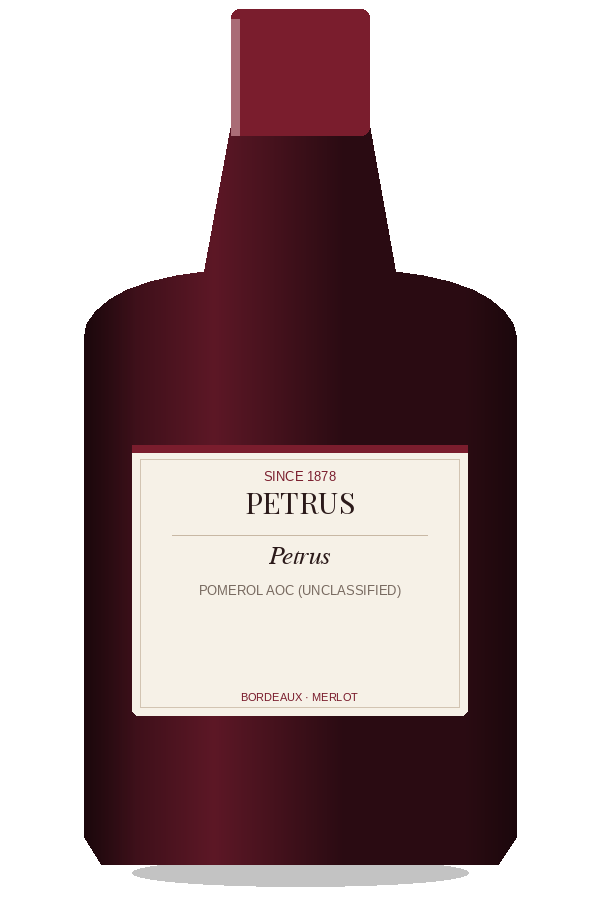 Deep garnet
Still Red · Pomerol AOC (unclassified) · Bordeaux
100% Merlot from 11.4 ha of blue clay at Pomerol's centre. Silk-and-velvet texture with truffle, chocolate, and dark cherry at its core; structurally imposing yet hedonistic, with a finish that stretches for minutes.
| Critic | Vintage | Score |
|---|---|---|
| Wine Advocate reviewed 2003 | 2000 | 100/100 |
| Wine Advocate reviewed 2001 | 1998 | 100/100 |
| Wine Advocate reviewed 2013 | 2010 | 100/100 |
Scores as published by each critic for the vintage shown.
Aroma: mulberry, dark cherry, violet, truffle, chocolate, smoke, Asian spice
Palate: black plum, wild strawberry, blackberry, licorice, graphite, espresso
100% Merlot from 11.4 ha of blue clay at Pomerol's centre. Silk-and-velvet texture with truffle, chocolate, and dark cherry at its core; structurally imposing yet hedonistic, with a finish that stretches for minutes.
Allow 95 minutes from open to pour.
Records of Petrus date to the mid-1750s, but the estate rose to international fame after Mme. Edmond Loubat became sole owner in 1945 and promoted it at top Paris restaurants. Jean-Pierre Moueix acquired a half-share in 1969; the Moueix family retains control today under Jean-Francois Moueix. Olivier Berrouet succeeded his father Jean-Claude as winemaker in 2008. The entire Cabernet Franc was progressively replaced with Merlot from the late 2000s.
On the nose, mulberry, dark cherry, violet, truffle, chocolate. On the palate, black plum, wild strawberry, blackberry, licorice, graphite. Structurally full-bodied, firm tannins, medium acidity with a very long finish. 100% Merlot from 11.4 ha of blue clay at Pomerol's centre. Silk-and-velvet texture with truffle, chocolate, and dark cherry at its core; structurally imposing yet hedonistic, with a finish that stretches for minutes.
Drink 10-40 from vintage. Young vintages benefit from 30-90 minutes of decanting; mature bottles should be handled carefully for sediment.
Truffle-rubbed beef tenderloin is the canonical pairing. Other strong matches include Aged Comté or Mimolette and Roasted Bresse pigeon with black cherry jus. The wine's truffle register mirrors the earthy garnish; ripe Merlot tannins cut cleanly through the butter sauce.
The blend is Merlot (100%). The wine is classified as Pomerol AOC (unclassified).
Tour two mythical wine regions of Médoc and St-Emilion in Bordeaux. Taste wines at 3 wine estates and enjoy a picnic lunch in the garden of a beautiful chateau in St-Emilion.

Discover the magnificent village of Saint-Emilion on a customized wine tour from Bordeaux. Enjoy an expert tasting in a grand cru château. Stop for photos to capture t...

Explore Bordeaux’s Left Bank on a private tour of the Médoc. Visit iconic wine estates, admire grand architecture, and enjoy sweeping vineyard views.