
Santorini: Top Sights Day Trip, Wine Tasting, & Oia Sunset
Discover the must-see spots of Santorini on this guided day trip. Admire panoramic views of the caldera, explore Perissa Beach, and watch an unforgettable sunset.
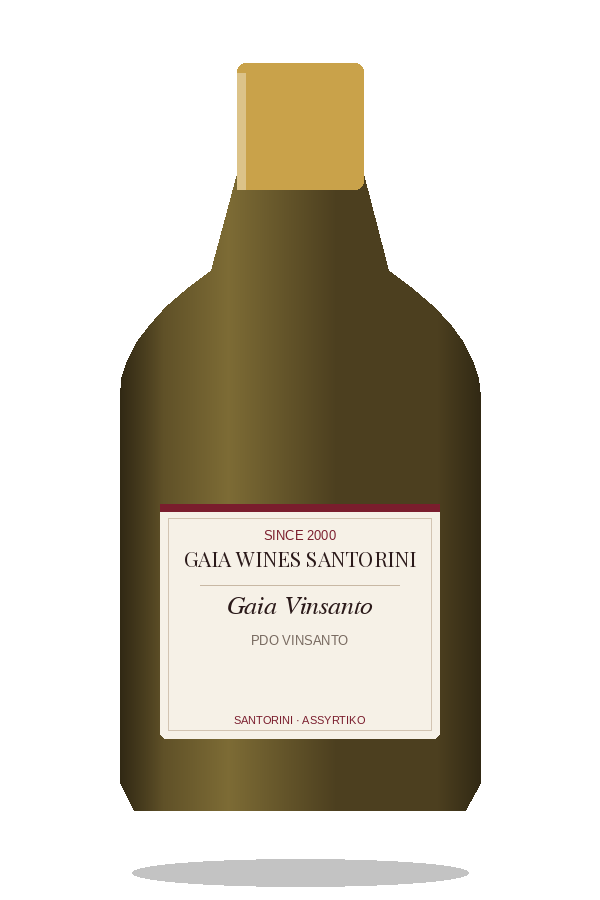 Gold, deepening to amber with age
Dessert Passito · PDO Vinsanto · Santorini
Long-aged Gaia Vinsanto: oxidative depth with caramel, walnut and dried-fig core lifted by Santorini's high natural acidity.
No critic score is published for this bottle that we can cite with a reviewer, a vintage and a review year, so none is shown. The rating in the header is our own.
Allow 5 minutes from open to pour.
Gaia's PDO Vinsanto sits alongside the dry-wine programme. Long oak ageing yields the oxidative caramel-and-walnut profile distinctive to long-aged Santorini sweet wines.
Structurally full-bodied, low tannins, high acidity with a long finish. Long-aged Gaia Vinsanto: oxidative depth with caramel, walnut and dried-fig core lifted by Santorini's high natural acidity.
Drink 20+ from release. Young vintages benefit from 30-90 minutes of decanting; mature bottles should be handled carefully for sediment.
Aged Roquefort is the canonical pairing. Other strong matches include Walnut and date cake and Loukoumades. Caramel sweetness handles veined-blue salt.
The blend is Assyrtiko (80%), Aidani (20%). The wine is classified as PDO Vinsanto.
Discover the must-see spots of Santorini on this guided day trip. Admire panoramic views of the caldera, explore Perissa Beach, and watch an unforgettable sunset.

Classic Tour (5.5h): Explore Oia’s blue domes, the island’s highest peak, and Pyrgos, with an optional wine tasting. Full-Day Tour (7h): Add Akrotiri Excavations, Red ...

Taste the island's viniculture by joining the Sip of Santorini Wine Tour. Have an exclusive look at 2 different local wineries, including approximately 8 samples, befo...