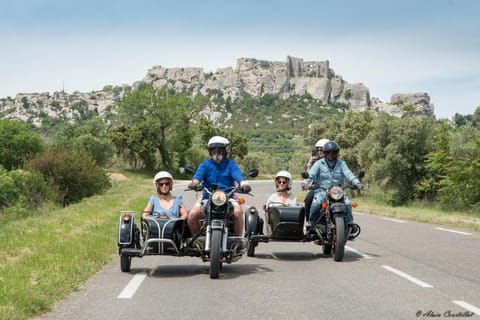
From Aix-en-Provence: Half-day Sidecar Wine Tour
Leave Aix-en-Provence aboard a vintage sidecar and discover the legendary Sainte-Victoire mountain, Cézanne’s muse, along with charming villages and local wine tastings.
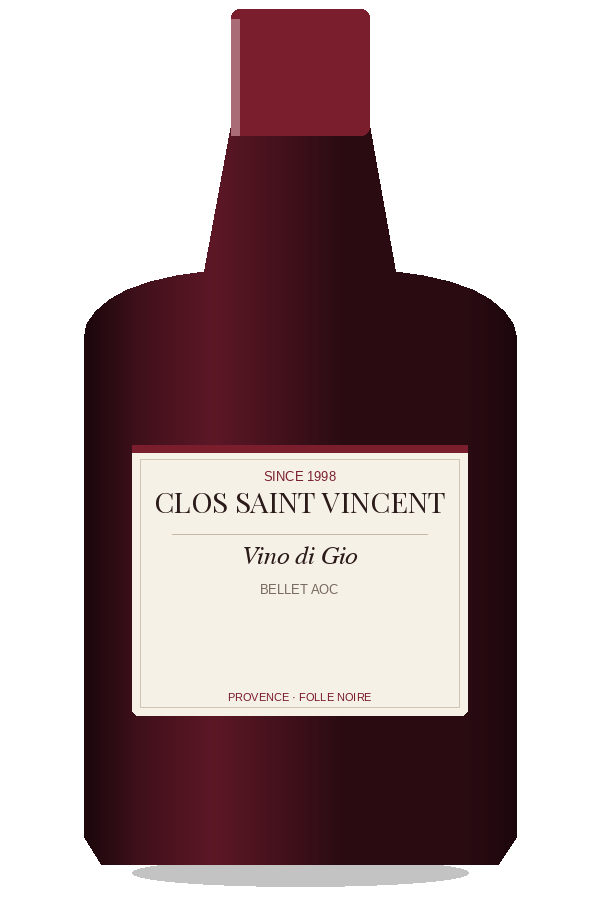 Ruby, medium depth
Still Red · Bellet AOC · Provence
Single-vineyard pure Folle Noire from biodynamic old vines, named for Joseph Sergi's father Giovanni. The estate's flagship Bellet red.
No critic score is published for this bottle that we can cite with a reviewer, a vintage and a review year, so none is shown. The rating in the header is our own.
Aroma: dried herbs, black cherry, black pepper, leather
Palate: plum, graphite, iron, Mediterranean salt
Single-vineyard pure Folle Noire from biodynamic old vines, named for Joseph Sergi's father Giovanni. The estate's flagship Bellet red.
Vino di Gio is the estate's prestige bottling and the rare 100 percent Folle Noire wine of the appellation. Aged for up to two years in old oak demi-muids, the wine is the most cellar-worthy red bottled from Bellet's tiny vineyard area.
Dried herbs, black cherry, black pepper and leather on the nose; plum, graphite, iron and Mediterranean salt on the palate. Medium-bodied with firm tannins and a long savoury finish.
Drink between 5 and 20 years from vintage. The 24 months of old-oak ageing gives unusual cellar potential for a wine from such a small AOC; younger bottles need 60 to 90 minutes of decanting.
Pure Folle Noire (Fuella Nera), the indigenous black grape of the Bellet AOC. Vino di Gio is one of the rare 100 percent Folle Noire bottlings in production.
Daube provencale is the canonical pairing; the wine's leather and iron register meets the long-braised beef. Wild boar civet and aged sheep's milk cheese are equally strong matches.
Leave Aix-en-Provence aboard a vintage sidecar and discover the legendary Sainte-Victoire mountain, Cézanne’s muse, along with charming villages and local wine tastings.
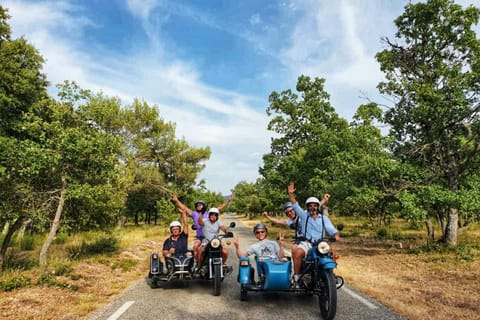
Cruise through Provence in a vintage sidecar, soak in Cézanne’s landscapes, and enjoy a chilled glass of wine at a local vineyard.
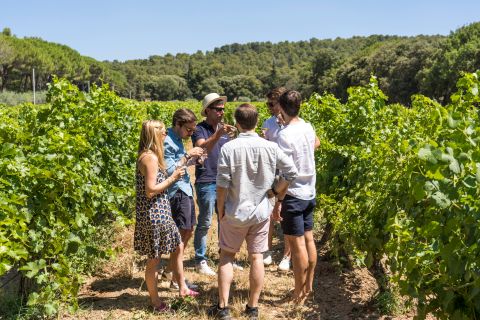
Experience the Provençal lifestyle with this tour from Aix-en-Provence. Start your day by savoring the wines of Côtes de Provence. In the afternoon, explore some of Lu...