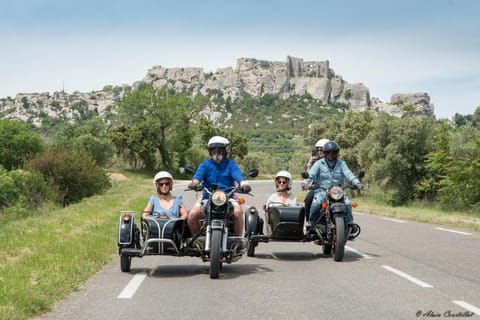
From Aix-en-Provence: Half-day Sidecar Wine Tour
Leave Aix-en-Provence aboard a vintage sidecar and discover the legendary Sainte-Victoire mountain, Cézanne’s muse, along with charming villages and local wine tastings.
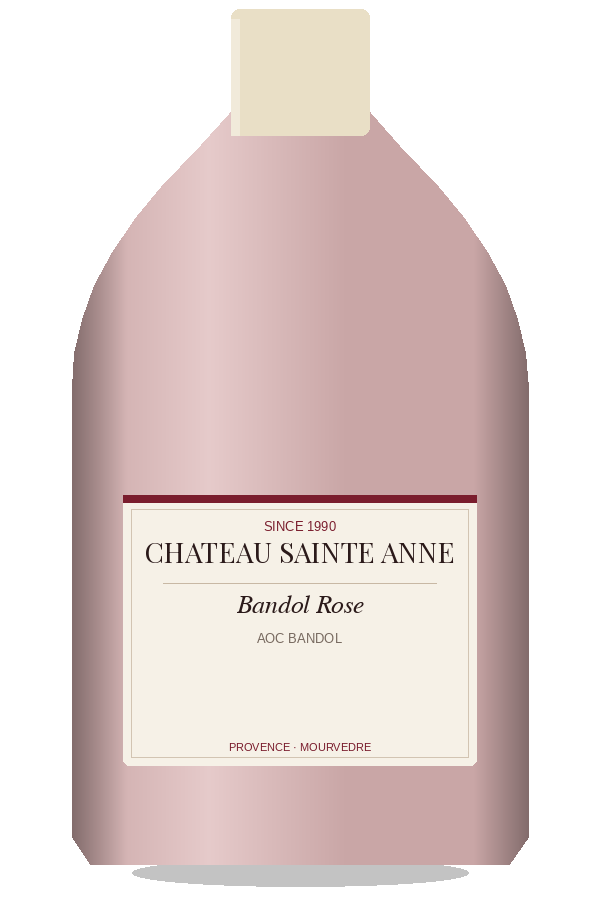 Pale salmon pink
Still Rose · AOC Bandol · Provence
Biodynamic Bandol rose with Mourvedre-led structure. Stone fruit and pomegranate over a saline-fennel finish; ages four years easily.
No critic score is published for this bottle that we can cite with a reviewer, a vintage and a review year, so none is shown. The rating in the header is our own.
Aroma: white peach, wild strawberry, fennel, white pepper
Palate: pomegranate, lemon zest, saline, rosemary
Biodynamic Bandol rose with Mourvedre-led structure. Stone fruit and pomegranate over a saline-fennel finish; ages four years easily.
Sainte Anne's biodynamic rose has been bottled in essentially its current form since the early 1990s. The cuvee benefits from the estate's long biodynamic practice (since 1988) and remains a precise, structured rose at a moderate price.
White peach, wild strawberry, fennel and white pepper on the nose; pomegranate, lemon zest, saline and rosemary on the palate. Medium-bodied with high acidity and a long saline finish.
Drink between 1 and 6 years from vintage. The Mourvedre share gives genuine cellaring potential; bottles often show better at year 2 or 3 than at release.
Yes. Sainte Anne does not use animal-derived fining agents, though the estate does not pursue formal vegan certification.
Tian d'aubergines is the canonical pairing. Grilled red snapper with thyme, salade nicoise and pissaladiere are equally strong matches.
Yes. The estate has farmed biodynamically since 1988, so the rose comes from biodynamic-farmed Mourvedre, Cinsault and Grenache fruit.
Leave Aix-en-Provence aboard a vintage sidecar and discover the legendary Sainte-Victoire mountain, Cézanne’s muse, along with charming villages and local wine tastings.
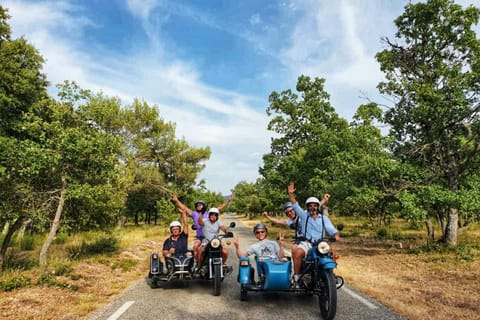
Cruise through Provence in a vintage sidecar, soak in Cézanne’s landscapes, and enjoy a chilled glass of wine at a local vineyard.
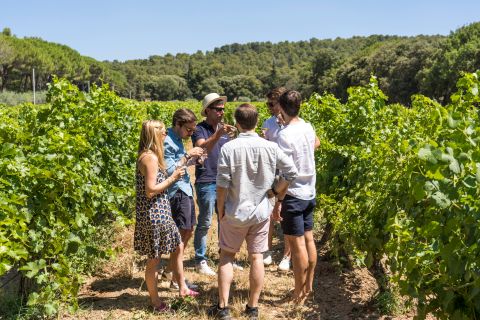
Experience the Provençal lifestyle with this tour from Aix-en-Provence. Start your day by savoring the wines of Côtes de Provence. In the afternoon, explore some of Lu...