
Bordeaux: Médoc & St-Emilion Wine 3 châteaux with lunch
Tour two mythical wine regions of Médoc and St-Emilion in Bordeaux. Taste wines at 3 wine estates and enjoy a picnic lunch in the garden of a beautiful chateau in St-Emilion.
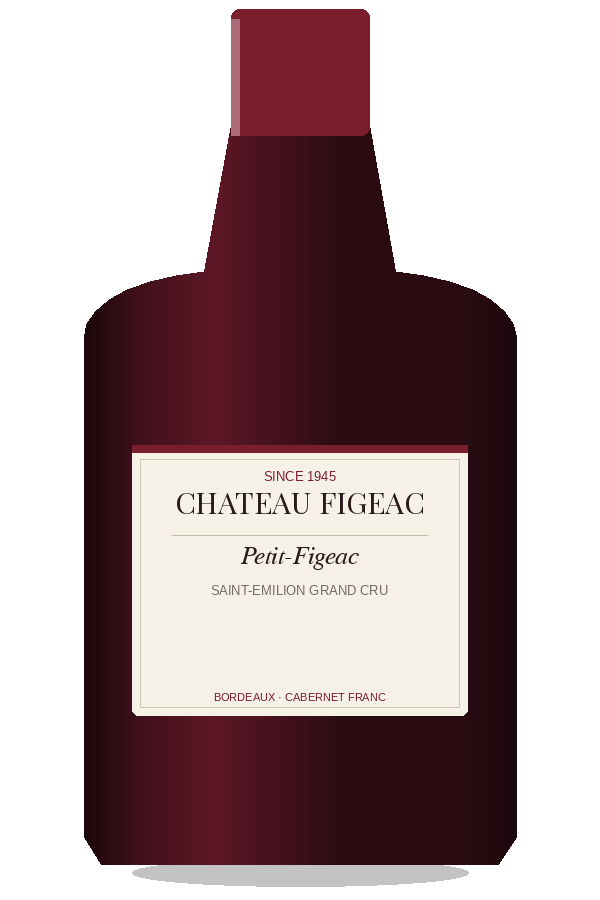 Ruby, medium depth
Still Red · Saint-Emilion Grand Cru · Bordeaux
The second wine of Chateau Figeac, one of the oldest second wines on the Right Bank (first produced 1945). Shares the same Cabernet-influenced gravel terroir and blending trio as the grand vin but from younger vines; lighter, more refined and more accessible earlier.
No critic score is published for this bottle that we can cite with a reviewer, a vintage and a review year, so none is shown. The rating in the header is our own.
Aroma: red fruits, flowers, light cedar, soft mineral
Palate: red cherries, vibrant acidity, medium-weight structure, sweet fruit on the finish
The second wine of Chateau Figeac, one of the oldest second wines on the Right Bank (first produced 1945). Shares the same Cabernet-influenced gravel terroir and blending trio as the grand vin but from younger vines; lighter, more refined and more accessible earlier.
Allow 65 minutes from open to pour.
Petit-Figeac is an early example of a formal Bordeaux second wine, created by Thierry Manoncourt in 1945 when he initiated strict quality-based selection across the Figeac estate. Originally sold under various names (La Grange Neuve de Figeac in some eras), it was formally renamed Petit-Figeac from the 2013 vintage. The wine is made exclusively from Figeac estate grapes, following the same Cabernet-heavy philosophy as the grand vin.
On the nose, red fruits, flowers, light cedar, soft mineral. On the palate, red cherries, vibrant acidity, medium-weight structure, sweet fruit on the finish. Structurally medium-bodied, medium tannins, high acidity with a medium-long, elegant with red-fruit brightness finish. The second wine of Chateau Figeac, one of the oldest second wines on the Right Bank (first produced 1945). Shares the same Cabernet-influenced gravel terroir and blending trio as the grand vin but from younger vines; lighter, more refined and more accessible earlier.
Drink 5-18 from vintage. Young vintages benefit from 30-90 minutes of decanting; mature bottles should be handled carefully for sediment.
Roast chicken with mushroom stuffing is the canonical pairing. Other strong matches include Grilled veal cutlet with sage butter and Lamb shoulder with tomatoes and olives. Medium Cabernet structure complements poultry elegantly; earthy mushroom mirrors the wine's mineral notes.
The blend is Cabernet Franc, Cabernet Sauvignon, Merlot. The wine is classified as Saint-Emilion Grand Cru.
Tour two mythical wine regions of Médoc and St-Emilion in Bordeaux. Taste wines at 3 wine estates and enjoy a picnic lunch in the garden of a beautiful chateau in St-Emilion.

Discover the magnificent village of Saint-Emilion on a customized wine tour from Bordeaux. Enjoy an expert tasting in a grand cru château. Stop for photos to capture t...

Explore Bordeaux’s Left Bank on a private tour of the Médoc. Visit iconic wine estates, admire grand architecture, and enjoy sweeping vineyard views.