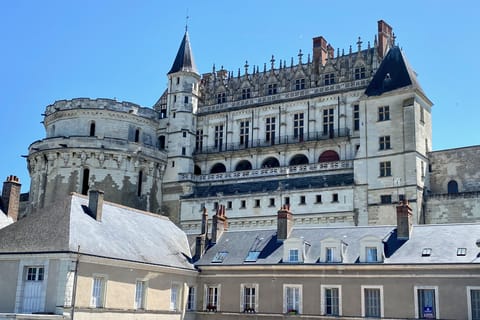
3-day Private Loire Castles Trip 2 Wine tastings by Mercedes
3-day Private tour to Top 7 Loire Valley Castles with 2 Wine tastings. Chenonceau, Amboise, Chambord, Blois, Chaumont, Da Vinci Clos Luce, Villandry by Mercedes. Live ...
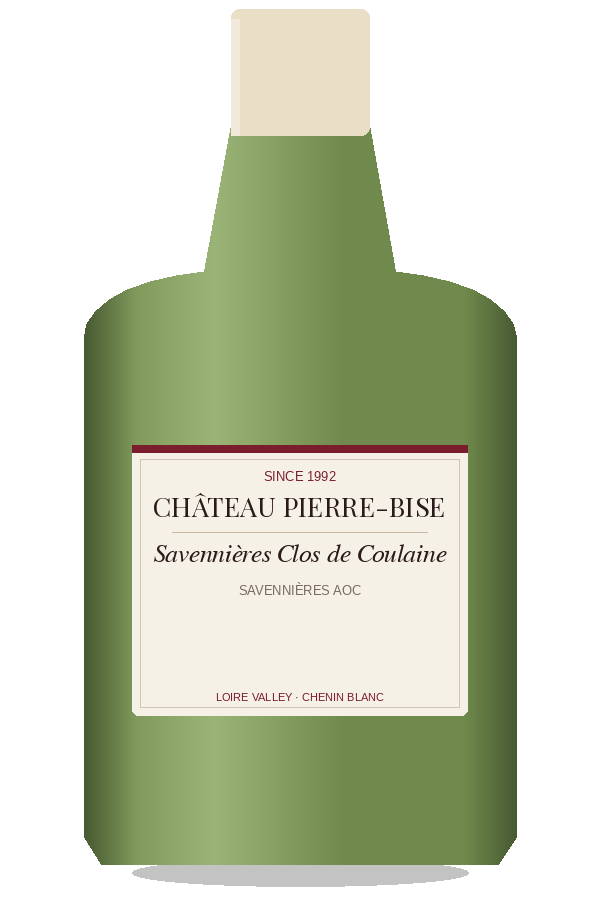 Pale gold
Still White · Savennières AOC · Loire Valley
Single-vineyard Savennières from Clos de Coulaine, integrated into Pierre-Bise in 1992. Bright citrus and white peach over a chalky frame, organic.
| Critic | Vintage | Score |
|---|---|---|
| Vinous reviewed 2023 | 2020 | 91/100 |
Scores as published by each critic for the vintage shown.
Aroma: lemon, white peach, chalk, white flower
Palate: citrus, stone fruit, chalky mineral, honey
Single-vineyard Savennières from Clos de Coulaine, integrated into Pierre-Bise in 1992. Bright citrus and white peach over a chalky frame, organic.
Pierre-Bise integrated the Clos de Coulaine vineyard in 1992, adding the Savennières AOC to the property's range. Claude Papin has bottled the parcel as a single-vineyard since.
Lemon, white peach, chalk and white flower on the nose; citrus, stone fruit, chalky mineral and honey on the palate. Medium-bodied with high acidity and a long chalky finish.
Drink between 3 and 15 years from vintage. The chalky frame gives the wine ageing capacity; mature bottles develop honey and stone-fruit depth.
A single-vineyard parcel in the Savennières AOC, integrated into Pierre-Bise in 1992.
Yes. The estate is organic-certified and the wines are produced without animal-derived fining agents.
3-day Private tour to Top 7 Loire Valley Castles with 2 Wine tastings. Chenonceau, Amboise, Chambord, Blois, Chaumont, Da Vinci Clos Luce, Villandry by Mercedes. Live ...
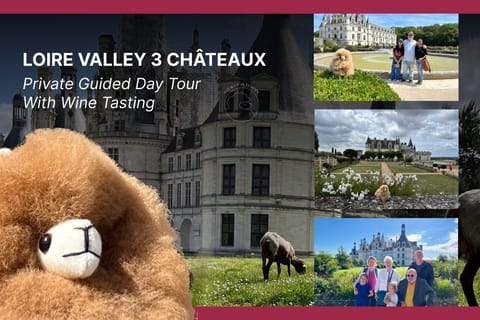
Discover the Loire Valley and visit its three most prestigious castles of your choice on a private guided tour, at your pace, according to your wishes
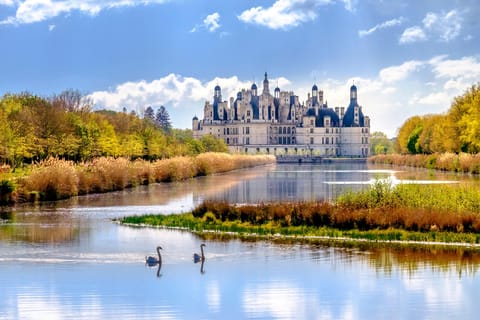
Escape Paris for a magical day in the Loire Valley. Explore fairytale castles, wander charming Blois, and enjoy a local wine tasting along the way.