
Bordeaux: Médoc & St-Emilion Wine 3 châteaux with lunch
Tour two mythical wine regions of Médoc and St-Emilion in Bordeaux. Taste wines at 3 wine estates and enjoy a picnic lunch in the garden of a beautiful chateau in St-Emilion.
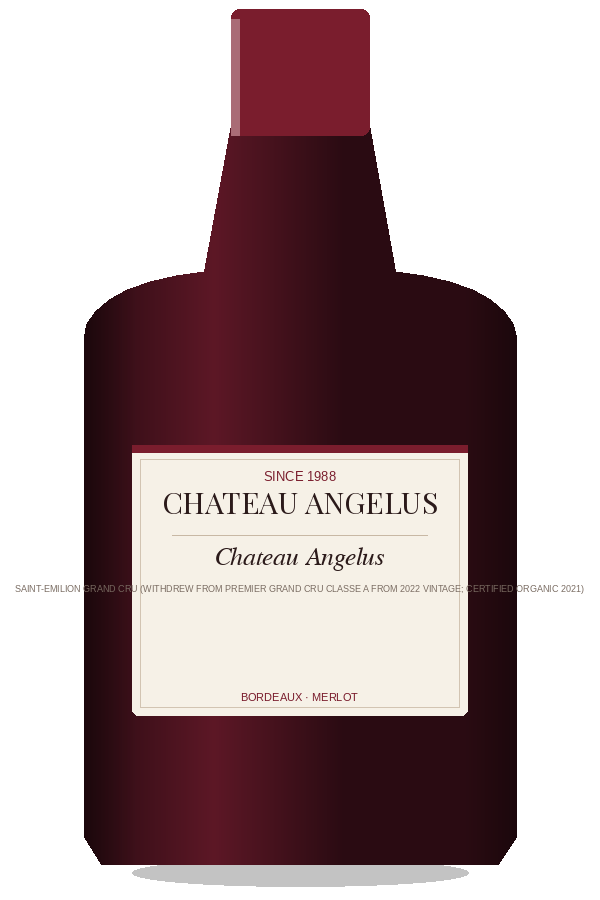 Deep garnet
Still Red · Saint-Emilion Grand Cru (withdrew from Premier Grand Cru Classe A from 2022 vintage; certified organic 2021) · Bordeaux
Merlot and Cabernet Franc from 27 classified hectares at the foot of Saint-Emilion's slope. Generous, opulent and structured, with dark cherry, violets and cedar complexity; certified organic from the 2021 vintage.
No critic score is published for this bottle that we can cite with a reviewer, a vintage and a review year, so none is shown. The rating in the header is our own.
Aroma: ripe black cherry, dark plum, violets, cedar, sweet spice
Palate: cassis, dark chocolate, licorice, graphite, toasty oak
Merlot and Cabernet Franc from 27 classified hectares at the foot of Saint-Emilion's slope. Generous, opulent and structured, with dark cherry, violets and cedar complexity; certified organic from the 2021 vintage.
Allow 95 minutes from open to pour.
Chateau Angelus traces its origins to a 16th-century estate, though the modern high-quality era begins under Hubert de Bouard de Laforest, who took charge in 1985. The estate was classified as Grand Cru Classe B in 1969 and promoted to Premier Grand Cru Classe A in 2012. Organic farming began in 2018, with Ecocert certification obtained in 2021. In 2021 the estate announced its withdrawal from all future Saint-Emilion classifications, effective from the 2022 vintage. Stephanie de Bouard-Rivoal is co-owner and CEO.
On the nose, ripe black cherry, dark plum, violets, cedar, sweet spice. On the palate, cassis, dark chocolate, licorice, graphite, toasty oak. Structurally full-bodied, firm tannins, medium acidity with a long, velvety with dark-fruit persistence finish. Merlot and Cabernet Franc from 27 classified hectares at the foot of Saint-Emilion's slope. Generous, opulent and structured, with dark cherry, violets and cedar complexity; certified organic from the 2021 vintage.
Drink 12-35 from vintage. Young vintages benefit from 30-90 minutes of decanting; mature bottles should be handled carefully for sediment.
Roast beef ribeye with bordelaise sauce is the canonical pairing. Other strong matches include Slow-roasted duck with cherry glaze and Lamb shoulder with eggplant. The wine's dark-fruit density and firm tannin is the textbook match for marbled beef with red-wine reduction.
The blend is Merlot (55%), Cabernet Franc (45%). The wine is classified as Saint-Emilion Grand Cru (withdrew from Premier Grand Cru Classe A from 2022 vintage; certified organic 2021).
Tour two mythical wine regions of Médoc and St-Emilion in Bordeaux. Taste wines at 3 wine estates and enjoy a picnic lunch in the garden of a beautiful chateau in St-Emilion.

Discover the magnificent village of Saint-Emilion on a customized wine tour from Bordeaux. Enjoy an expert tasting in a grand cru château. Stop for photos to capture t...

Explore Bordeaux’s Left Bank on a private tour of the Médoc. Visit iconic wine estates, admire grand architecture, and enjoy sweeping vineyard views.