
3-day Private Loire Castles Trip 2 Wine tastings by Mercedes
3-day Private tour to Top 7 Loire Valley Castles with 2 Wine tastings. Chenonceau, Amboise, Chambord, Blois, Chaumont, Da Vinci Clos Luce, Villandry by Mercedes. Live ...
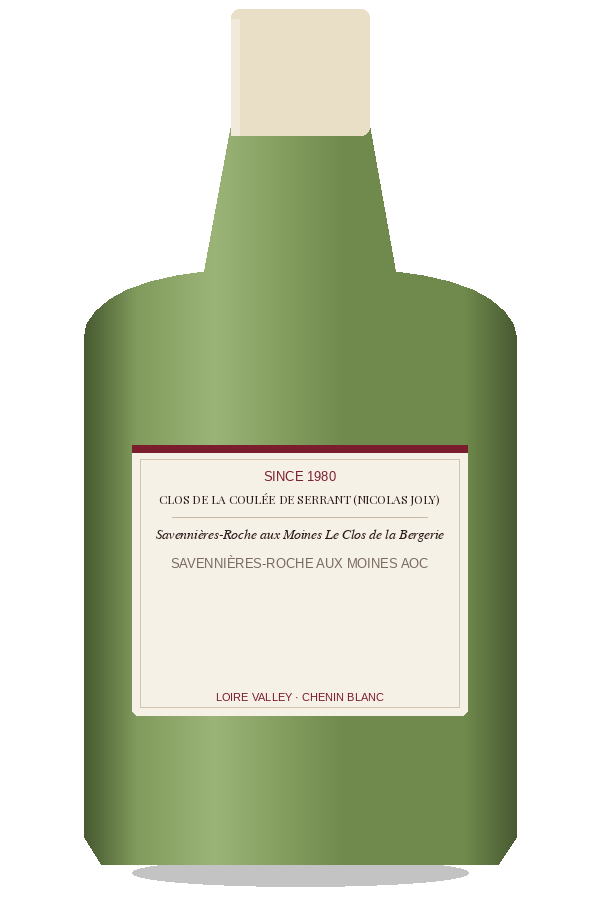 Pale gold
Still White · Savennières-Roche aux Moines AOC · Loire Valley
Joly's Roche aux Moines bottling on schist. Citrus, quince and honey over a chalky, saline frame; smaller-scale than Coulée de Serrant but with the same biodynamic intensity.
| Critic | Vintage | Score |
|---|---|---|
| Vinous reviewed 2023 | 2020 | 93/100 |
Scores as published by each critic for the vintage shown.
Aroma: lemon zest, white peach, honeysuckle, chalk
Palate: citrus, quince, saline mineral, honey
Joly's Roche aux Moines bottling on schist. Citrus, quince and honey over a chalky, saline frame; smaller-scale than Coulée de Serrant but with the same biodynamic intensity.
Le Clos de la Bergerie is a portion of the Roche aux Moines AOC farmed by the Joly family. The cuvée extends the estate's biodynamic project beyond the Coulée de Serrant monopole.
Lemon zest, white peach, honeysuckle and chalk on the nose; citrus, quince, saline mineral and honey on the palate. Full-bodied with high acidity and a long, layered finish.
Drink between 5 and 25 years from vintage. Like Coulée de Serrant, the wine benefits from extended decanting (2 to 4 hours) to express its biodynamic intensity.
Within the Savennières-Roche aux Moines AOC on schist soils. Part of Joly's 7-hectare biodynamic estate.
Yes. The estate has been Demeter-certified biodynamic since 1984 and uses no animal-derived fining agents.
3-day Private tour to Top 7 Loire Valley Castles with 2 Wine tastings. Chenonceau, Amboise, Chambord, Blois, Chaumont, Da Vinci Clos Luce, Villandry by Mercedes. Live ...
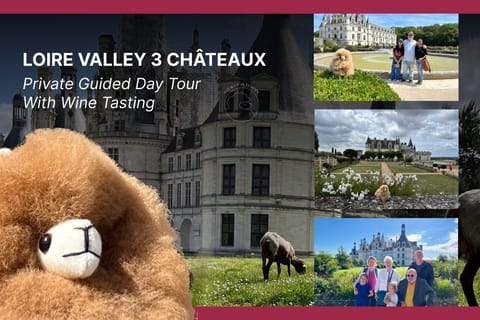
Discover the Loire Valley and visit its three most prestigious castles of your choice on a private guided tour, at your pace, according to your wishes
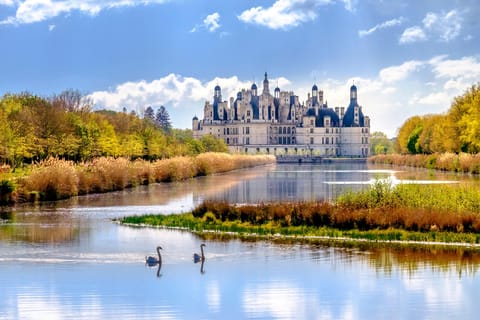
Escape Paris for a magical day in the Loire Valley. Explore fairytale castles, wander charming Blois, and enjoy a local wine tasting along the way.