DO Rias BaixasAlbarinoEUR 12-17 retail
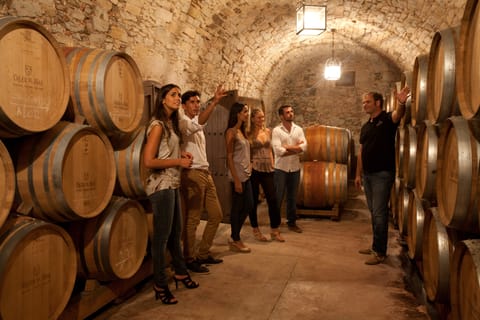
The flagship Albarino from the Cambados cooperative founded in 1986 by fifty local growers, named for the medieval Galician troubadour Martin Codax.
Tip: Martin Codax is the most widely distributed Rias Baixas Albarino in export markets and the best value-to-availability ratio for an introduction to the variety.
DO Rias BaixasAlbarinoEUR 11-15 retail
Burgans is the Martin Codax cooperative's bottling from older vines in the village of Burgans within Cambados. A young, unoaked 100 percent Albarino with riper stone fruit and a longer mineral finish than the regular Martin Codax cuvee, sold for only one or two euros more.
Tip: Burgans is a step up from the regular Martin Codax cuvee for under EUR 15, with riper stone-fruit character from the older Burgans vines.
DO Rias BaixasAlbarinoEUR 16-22 retail
The flagship Albarino from Pazo de Senorans in Meis (Val do Salnes), founded in 1979 by Marisol Bueno and Javier Mareque on a 16th-century estate.
Tip: Pazo de Senorans Albarino is the reference young Albarino from one of the founding bodegas of DO Rias Baixas; Marisol Bueno led the Consello Regulador 1986 to 2007.
DO Rias BaixasAlbarinoEUR 17-24 retail
The entry-tier bottling from Bodegas del Palacio de Fefinanes in Cambados, the producer that registered the first commercial Albarino brand in 1928. The Albarino de Fefinanes label still depicts the engraving of the pazo that the bodega adopted that year. Stainless-steel-fermented 100 percent Albarino with classical lemon-and-saline Salnes character.
Tip: Buy directly from the bodega tasting room on the Plaza de Fefinanes if visiting Cambados; the visit includes the 17th-century pazo cellars.
DO Rias BaixasAlbarinoEUR 18-25 retail
Jorge Ordonez founded Bodegas La Cana in 2003 in the Val do Salnes to demonstrate that Albarino can carry the complexity and longevity of a serious white.
Tip: Ordonez first imported Albarino to the US in 1991. La Cana is the bodega he founded later to express the variety at its serious end while keeping the price accessible.
DO Rias BaixasAlbarinoEUR 16-22 retail
The entry-level Albarino from Granbazan, the Otero family bodega founded in 1981 as Agro de Bazan and a co-initiator of DO Rias Baixas. Etiqueta Verde is 100 percent Albarino with an 8-hour pre-fermentation maceration, free-run and lightly pressed juice fermented with native yeasts and aged on lees for at least four months. The first vineyard in Rias Baixas planned specifically for premium wines was Finca Tremoedo, planted in 1980 from cuttings across Galicia.
Tip: The Granbazan bodega in Tremoedo is a fifteen-minute drive north of Cambados, open for tasting visits. The bodega was bought by Baigorri of Rioja in 2017.
DO Rias BaixasAlbarinoEUR 16-22 retail
The Atlantico cuvee is the flagship still Albarino from Mar de Frades in Meis, the bodega whose label features a thermo-sensitive blue ship that appears at serving temperature.
Tip: Mar de Frades is the technical face of contemporary Salnes Albarino; the thermochromic boat on the label is a useful serving-temperature indicator at the table.
DO Rias BaixasAlbarinoEUR 12-16 retail
Bodegas Castro Martin's Family Estate Selection is the entry-tier 100 percent Albarino from the Martin-Serantes family in Ribadumia (Val do Salnes), with vines on pure granitic sands and viticulture described by the family as as natural as possible, though without organic certification. Served in British Airways first class and on P&O and Cunard cruise lines.
Tip: Castro Martin runs cellar visits by appointment from the 1981 bodega in Ribadumia. The Family Estate Selection is the most accessible entry to the producer.
DO Rias BaixasAlbarinoEUR 17-24 retail
The estate Albarino from Bodega Zarate in Padrinan (Val do Salnes), an estate with documented family history to 1707 and home of El Palomar, the oldest documented pre-phylloxera Albarino plot in Rias Baixas (planted 1850). Eulogio Pomares, the seventh generation, runs the estate with near-fully biodynamic practices, no chemicals, and his own biodynamic teas; the bodega has been recognised since 1994 for Integrated Production.
Tip: Zarate Albarino represents some of the most distinctive and age-worthy white wine made in Spain, mostly from old vines.
DO Rias BaixasAlbarinoEUR 18-25 retail
The entry Albarino from Bodegas Gerardo Mendez, founded by Gerardo Mendez (whose family name in Galician means blacksmith, hence Do Ferreiro).
Tip: Do Ferreiro standard Albarino is the affordable entry to a three-generation family estate that was a founding member of DO Rias Baixas in 1988. Their Cepas Vellas is the cellared upgrade.
DO Rias BaixasAlbarinoEUR 17-23 retail
The entry Albarino from Xurxo Alba at Bodegas Albamar in Cambados, founded in 2006. The family has farmed Salnes Albarino for generations from 2.5 hectares of estate plots with another seven sourced through long-term contracts. Albamar ferments with native yeasts (one of only a handful of Rias Baixas producers doing so on a serious scale), giving the wine a fuller, more complex character than the regional norm at a comparable price.
Tip: Albamar is one of around 2 percent of Rias Baixas bodegas fermenting with native yeasts. The character difference is noticeable on the entry Albarino.
DO Rias BaixasAlbarinoEUR 12-17 retail
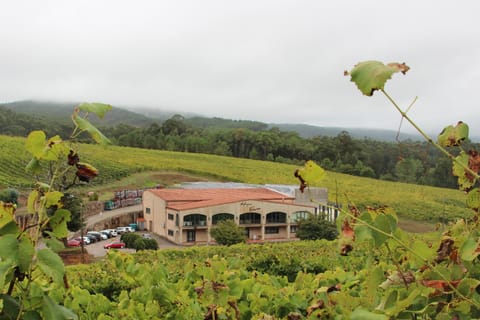
Pazo Pegullal's flagship Albarino is from the 30-hectare Finca Pegullal in the Condado do Tea subzone at Salceda de Caselas, on the banks of the Mino river.
Tip: The estate also produces olive oil and natural cosmetics; the cellar door sells the full range and the gardens are open to visitors.
DO Rias BaixasAlbarinoEUR 14-19 retail
The flagship Albarino from Bodegas Lagar de Costa, a four-generation family estate in Vilanova de Arousa whose vineyards sit literally on the shore of the Ria de Arousa, some rows just metres from the estuary water.
Tip: Lagar de Costa's vineyards are zero metres from the Ria de Arousa; the estate is the most maritime-influenced Albarino in distribution under EUR 20.
DO Rias BaixasAlbarinoEUR 19-25 retail
The entry-level Alberto Nanclares Albarino from the Salnes partnership of Alberto Nanclares and Silvia Prieto (formed 2015). The bodega farms 2.2 hectares across twelve parcels in Val do Salnes with biodynamic practices, composts seaweed harvested from the nearby Ria de Arousa, and ferments with indigenous yeasts. Among the most committed minimal-intervention Albarinos available under EUR 25.
Tip: Nanclares' compost includes Ria de Arousa seaweed, applied to twelve small parcels. The Alberto Nanclares bottling is the most accessible entry.
DO Rias BaixasAlbarinoEUR 16-22 retail
Pedralonga is a 100 percent Albarino from a 7.5-hectare cru of granite hillside planted in 1982 by Francisco Alfonso, ten miles from the Atlantic.
Tip: Pedralonga (Big Rock in Gallego) refers to the huge granite outcrops in the vineyard. The wine has been organic since planting and biodynamic since 2007.
DO Rias BaixasAlbarinoEUR 15-20 retail
Fillaboa is the flagship 100 percent Albarino from Granja Fillaboa in Salvaterra do Mino (Condado do Tea), a 70-hectare single-estate property bordering the Mino river.
Tip: Fillaboa is a single-estate Condado do Tea Albarino, a rarity in a DO dominated by small parcels. The bodega visits include a tour of the contiguous 70-hectare property.
DO Rias BaixasAlbarino, Loureira, Caino BrancoEUR 17-23 retail
Terras Gauda O Rosal is the canonical example of the O Rosal blend: roughly 70 percent Albarino, 18 percent Loureira and 12 percent Caino Branco from the bodega's estate vineyards in the O Rosal subzone on the Mino.
Tip: Terras Gauda O Rosal is the best widely distributed example of the O Rosal three-grape blend; the Caino Branco component is rare outside this subzone.
DO Rias BaixasAlbarinoEUR 13-18 retail
Paco & Lola is a Salnes cooperative founded in 2005 that aggregates around 400 small-grower partners across the Salnes peninsula. The flagship 100 percent Albarino is a stainless-steel-fermented young white with the polka-dot label that has become a recognisable Rias Baixas presence in supermarkets globally. The wine is consistently bright and fruit-forward, the easy summer-table introduction to the category.
Tip: Paco & Lola is the most widely supermarket-stocked Rias Baixas Albarino. The cooperative model spreads benefit across hundreds of small Salnes growers.