Day-by-day estate-visit plans for Rías Baixas: weekend, first-timer and deep-cellar editions.
Day-by-day plans
Five subzones in three days ★ 4.7
Day 1
Morning
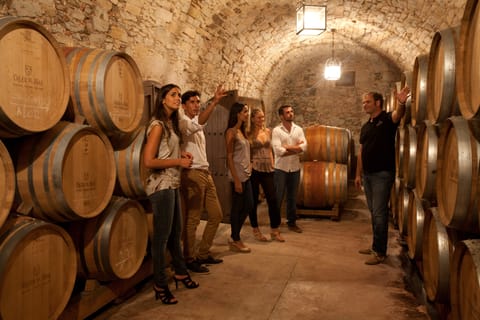
Arrive in Cambados and walk the Plaza de Fefinanes for an orientation visit at the Bodegas del Palacio de Fefinanes, the 1647 pazo bodega that registered the first commercial Albarino brand in 1928. The tasting visit goes beneath the pazo into the 17th-century cellars.
Afternoon
Drive ten minutes north to Pazo de Senorans in Meis for a tasting and walk of the 16th-century estate. Marisol Bueno (longtime Consello Regulador president) and family launched commercial bottling in 1989; the Seleccion de Anada is the bodega's library-aged benchmark.
Evening
Evening at the Cambados seafront with a Goliardo Tintos de Mar from Forjas del Salnes if any restaurant has it.
Day 2
Morning
Drive north to the Soutomaior subzone (about 25 minutes south of Pontevedra) for a morning visit to a cellar within the small Soutomaior concello. The Castelo de Soutomaior heritage site sits at the centre of the subzone.
Afternoon
Continue inland and east to the Ribeira do Ulla subzone, the cooler and drier landlocked subzone added in May 2000. The Ulla valley runs south of Santiago de Compostela; expect multi-varietal blends of Albarino, Loureira, Treixadura and Caino Branco.
Evening
Drive back to Cambados or stay in Padron for an early start to the southern subzones.
Day 3
Morning
Drive south from Cambados (or Padron) to the O Rosal subzone via Tui (about 90 minutes). Morning visit to an O Rosal producer to taste the three-grape Albarino-Loureira-Caino Branco blend that distinguishes this subzone from the single-varietal Salnes norm.
Afternoon
Continue east along the Mino into the Condado do Tea subzone. Visit Pazo Pegullal at Salceda de Caselas (or another Condado cellar) to taste the warmer, riper Condado Albarino style on the river-influenced microclimate.
Evening
Stay overnight in Tui or drive back to Cambados (2 hours) for onward travel.
Val do Salnes extended tour, 2 days ★ 4.9
Day 1
Morning
Begin in Cambados at Bodegas del Palacio de Fefinanes on the Plaza de Fefinanes for the historical anchor: 1647 pazo, 1928 first commercial Albarino brand. The cellar visit is the long-form orientation to the variety's history.
Afternoon
Afternoon visit to Bodegas Gerardo Mendez (Do Ferreiro) in Meano. The estate's Cepas Vellas plot, planted in 1785 on granite in front of the bodega, is the oldest documented Albarino vineyard in Rias Baixas. Taste the Cepas Vellas alongside the entry Do Ferreiro.
Evening
Evening drink at Ribeira de Fefinanes back in Cambados; their by-the-glass list is the broadest Albarino survey on the peninsula.
Day 2
Morning
Morning visit to Bodega Zarate in Padrinan, Meano, the estate documented to 1707 whose El Palomar plot (planted 1850) is the oldest documented pre-phylloxera Albarino in Rias Baixas. Eulogio Pomares walks visitors through the near-fully biodynamic farming approach.
Afternoon
Afternoon at Bodegas Forjas del Salnes in Meano for a tasting of Rodri Mendez's Goliardo line: Caino Tinto, Espadeiro, Loureiro Tinto, Sousón and Brancellao native reds, alongside the bodega's Albarinos. The reds redefine what Rias Baixas can be.
Evening
Evening departure or final dinner at a Cambados seafood restaurant.
Festa do Albarino week, 3 days ★ 4.8
Day 1
Morning
Arrive in Cambados ahead of the Festa do Albarino. The 2026 edition (LXXIV) runs 29 July to 2 August. Walk the Paseo da Calzada to see the festival site being set up, then take a quiet morning cellar visit to Bodegas del Palacio de Fefinanes on the Plaza de Fefinanes before the festival crowds arrive.
Afternoon
Afternoon at the festival opening pour stations along the Paseo da Calzada. Around fifty wineries pour by the glass; the Cabaleiros do Albarino brotherhood coronation typically opens proceedings.
Evening
Festival concert and tapas on the Paseo da Calzada; finish with fireworks over the Ria de Arousa.
Day 2
Morning
Slow morning, then return to the Paseo da Calzada pour stations. Use the festival to compare cooperatives (Martin Codax, Paco & Lola), historic family producers (Pazo de Senorans, Fefinanes) and small-volume natural-leaning bodegas (Albamar, Nanclares y Prieto) side by side.
Afternoon
Afternoon visit to Bodegas Forjas del Salnes in Meano (the small bodega itself does not pour at the festival; the Mendez family's Goliardo bottlings need to be sought separately). Pre-book ahead of the festival days.
Evening
Evening at the festival on the Paseo da Calzada; the Saturday concert programme is the largest.
Day 3
Morning
Sunday morning quiet cellar visit at Pazo de Senorans in Meis or Bodega Zarate in Padrinan. Avoid the Saturday late-night crowd by booking for first appointments at 10 or 11am.
Afternoon
Final festival visit to the Paseo da Calzada for the closing pours and the fireworks send-off over the Ria.
Evening
Festival closing programme; depart Monday.
Camino de Santiago end plus wine, 3 days ★ 4.7
Day 1
Morning
Walk the final stage of the Camino de Santiago into Santiago de Compostela (most commonly the last 5km from Monte do Gozo) and present at the Pilgrim's Office. Morning at the cathedral and the Praza do Obradoiro.
Afternoon
Afternoon visit to a Ribeira do Ulla producer if cellars are open, or an old-town walk through the historic quarter; the cathedral cellars and the Hostal dos Reis Catolicos are key stops.
Evening
Pilgrim dinner in Santiago old town with Galician wine.
Day 2
Morning
Drive or train Santiago to Cambados (1 hour by car, longer by indirect train via Pontevedra). Morning visit to Bodegas del Palacio de Fefinanes on the Plaza de Fefinanes for the Albarino historical anchor.
Afternoon
Afternoon at Pazo de Senorans in Meis with a tasting of the Seleccion de Anada (if released) alongside the standard Albarino, walking through the 16th-century estate.
Evening
Evening on the Cambados seafront with Goliardo Tintos de Mar or Albamar Albarino by the glass.
Day 3
Morning
Morning visit to Adegas Albamar in Castrelo de Cambados or Bodega Zarate in Padrinan for a natural-leaning Salnes counterpoint to the previous day's classical producers.
Afternoon
Final visit to Bodegas Gerardo Mendez (Do Ferreiro) in Meano to taste the Cepas Vellas (1785-planted Albarino) before departure.
Evening
Drive or train back to Santiago (1 hour) for onward travel.
Natural and biodynamic Salnes weekend, 2 days ★ 4.8
Day 1
Morning
Begin in Cambados at Adegas Albamar in Castrelo de Cambados, one of the few Rias Baixas bodegas fermenting Albarino with native yeasts (around 2 percent of the DO). Xurxo Alba's range includes five parcel-specific Albarinos and small-volume reds.
Afternoon
Afternoon visit to Nanclares y Prieto in Castrelo de Cambados to taste the biodynamic-practising bodega's parcel-specific Albarinos. The Ria de Arousa seaweed composting and the fermentation with indigenous yeasts give the wines an unusual restrained character.
Evening
Dinner in Cambados with the day's wines.
Day 2
Morning
Morning visit to Bodega Zarate in Padrinan, Meano, the seventh-generation estate near-fully biodynamic without Demeter certification and recognised for Integrated Production since 1994. The El Palomar pre-phylloxera plot is the historical highlight.
Afternoon
Afternoon at Adega Pedralonga in Castrelo de Cambados, organic since planting in 1982 and integrating biodynamic methods from 2007. Whole-bunch pressing without added SO2 and lees-aged single-vineyard Albarino. Closes the loop on the Salnes natural and biodynamic scene.
Evening
Final dinner in Cambados or evening drive to Pontevedra or Vigo.
Arousa catamaran and shellfish raft weekend, 2 days ★ 4.5
Day 1
Morning
Board a guided catamaran or pequeno-barco tour of the Ria de Arousa shellfish rafts (bateas) from the Cambados or Vilanova quay. The bateas are floating platforms producing mussels, oysters and scallops; the tours typically end with an on-board tasting of raw shellfish and a glass of Albarino.
Afternoon
Afternoon visit to Bodegas Lagar de Costa in Vilanova de Arousa, the family bodega whose vineyards sit literally zero metres from the Ria de Arousa shoreline. Taste the entry Albarino alongside the lees-aged single-vineyard release.
Evening
Dinner in Cambados or Vilanova with raw oysters and a saline Salnes Albarino.
Day 2
Morning
Morning visit to Bodegas del Palacio de Fefinanes on the Plaza de Fefinanes in Cambados; the 17th-century cellars run beneath the square.
Afternoon
Afternoon at Bodegas Granbazan in Tremoedo (Vilanova de Arousa), the 1981 bodega with a French-influenced 1989 manor cellar. Finca Tremoedo, planted 1980, was an early Rias Baixas vineyard designed for premium-tier Albariño production.
Evening
Final dinner on the Cambados quayside; depart on Monday.
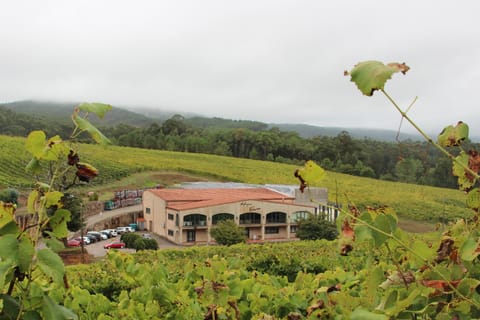
Discover the essence of Albariño wines. This guided winery experience takes you through vineyards, inside a modern yet tradition-driven cellar, and a tasting of three ...
You will get to know our facilities, where we will explain the different processes of grape transformation and wine production until bottling. Two wines and a vermouth...
You will get to know our facilities, where we will explain the different processes of grape transformation and wine production until bottling. Two wines and a vermouth...