Chardonnay
The dominant grape of Franciacorta and the structural backbone of every category in the DOCG. The consortium's vitigni model puts Chardonnay at over 75 percent of total plantings across the appellation.
The grapes that define Franciacorta: the canonical varietals and how the region expresses them.
The grapes that define Franciacorta: the canonical varietals and how the region expresses them.
The dominant grape of Franciacorta and the structural backbone of every category in the DOCG. The consortium's vitigni model puts Chardonnay at over 75 percent of total plantings across the appellation.
The second grape of the appellation at roughly 17 percent of total plantings per the consortium's vitigni model. Pinot Nero brings backbone, red-fruit aromatics and the colour for Rosé Franciacorta (where the disciplinare requires at least 35 percent Pinot Nero in the blend). The variety also defines Riserva-level cuvées and the pure-Pinot bottlings like Mosnel's Nature and Ca' del Bosco's pinot-led reserves. Profiles run red cherry, raspberry, pink peppercorn and forest floor on the cooler limestone-marl slopes of Monticelli Brusati and the higher Adro vineyards. Adro, Erbusco and Monticelli Brusati carry the appellation's deepest Pinot Nero plantings.
Pinot Bianco occupies only about 3 percent of total Franciacorta plantings but plays a central role in two contexts. First, alongside Chardonnay it is the only grape permitted in Satèn (the cuvée bottled at a lower 4.5-5 bar pressure with a softer mousse). Second, several historic estates retain old Pinot Bianco vineyards and bottle pure-Pinot-Bianco Franciacorta as a regional signature; Mosnel's Camignone plot at 16th-century cellars has been a long-standing Pinot Bianco holding. Profiles run pear, apple, white blossom and a textured almond-skin grip that softens the firmer Chardonnay base.
Local Brescian heritage white added to the Franciacorta disciplinare in the 2017 sixth-amendment revision. Permitted up to 10 percent of the blend in every Franciacorta category except Satèn (which remains Chardonnay and Pinot Bianco only). The grape was rescued from near extinction by Mosnel and Barone Pizzini in the early 2000s through trial plantings on their Camignone and Provaglio d'Iseo holdings. Late-ripening and naturally high in acidity, Erbamat is the consortium's tool to anchor freshness as the Franciacorta climate warms. Profiles run lime peel, green apple, mountain-herb tones and a saline, racy finish; the grape rarely exceeds 11 percent ABV on its own.
Permitted under the DOC Curtefranca disciplinare for the still-wine bottlings of the Franciacorta hills (DOCG Franciacorta itself is sparkling-only).
The dominant red of the Curtefranca DOC, which covers the still wines from the same hills as the Franciacorta DOCG. Merlot appears in nearly every Curtefranca Rosso blend, often alongside Cabernet Sauvignon, Cabernet Franc, Nebbiolo and Carmenere. Ca' del Bosco's Maurizio Zanella IGT Sebino (a Cabernet-Merlot blend), Bellavista's Convento dell'Annunciata IGT and the Villa Franciacorta Curtefranca Rosso all rely on Merlot. Profiles run plum, black cherry, cocoa and supple tannin on the warmer south-facing slopes. The grape thrives on the clay-rich glacial-moraine soils around Erbusco and Adro.
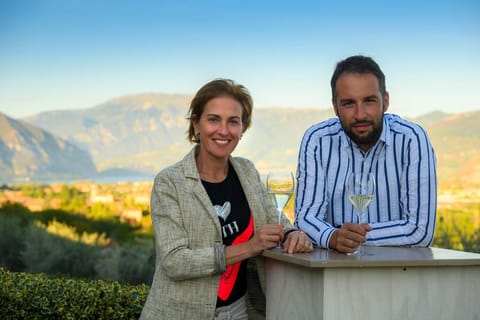
Explore the Ferghettina winery with a guided visit. Choose between a classic or reserve tasting, each paired with local specialties.
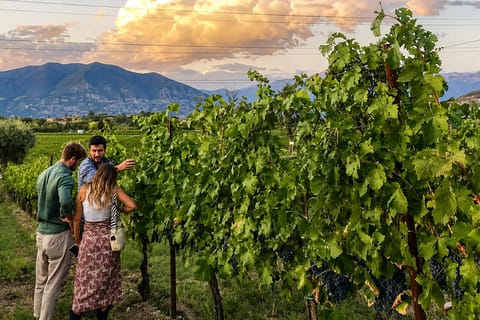
Discover an authentic experience in Franciacorta with a visit to the winery, wine tasting and local food tasting, guided directly by a family of producers.
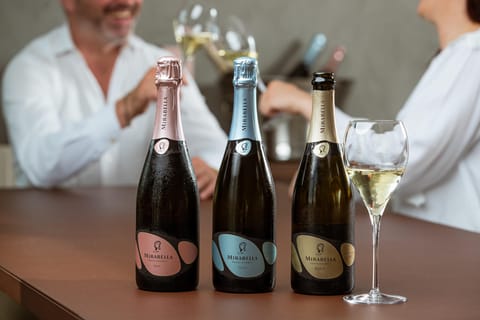
Discover Franciacorta on a tour of vineyards and a historic cellar, and taste three excellent Mirabella wines accompanied by artisanal products.
Peak wine-travel season in Franciacorta is spring through autumn, with harvest the standout window.
classified-growth and grand-cru estates require booking days to weeks ahead; smaller family domaines often take walk-ins midweek.
most estates open 10:00 to 17:00 by appointment, often closed Sunday and Monday.
tipping is not expected at tastings; buying a bottle from the cellar door is the customary thank-you.
Ask the next local you meet what they would order. Franciacorta rewards trust.