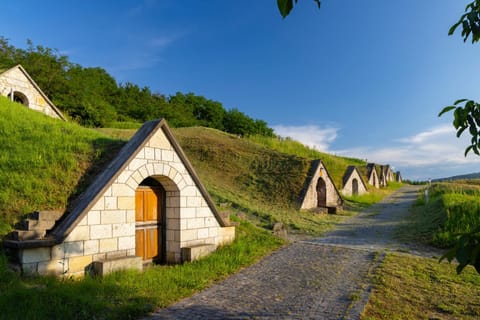
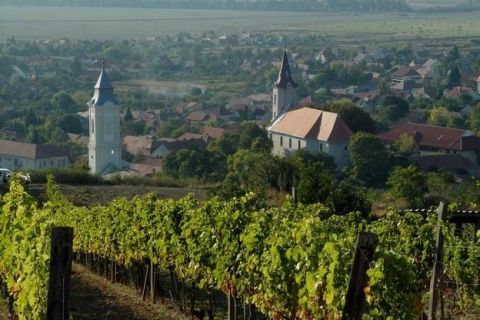
The Bükk National Park, the largest continuous forest in Hungary, lies between the Eger and Tokaj wine regions. The park's volcanic geology produced cave villages where Swabian settlers carved dwellings and cellars directly into the tuff, similar to the Hercegkút cellar village within Tokaj itself. The village of Cserépfalu is the most accessible example; it offers a geological and cultural parallel to the Gombos-hegyi UNESCO cellar street in Hercegkút.
Pours: Eger region whites and reds at nearby wine villages, Traditional cave-cellar heritage wines
Tip: A combined day trip taking in the Eger wine region and the Bükk cave villages makes a natural loop from Tokaj; hire a car in Tokaj town and drive the loop via Eger, returning via the Bükk park and Miskolc.
The Aggtelek Karst, a UNESCO World Heritage Site, is a system of 712 cave systems straddling the Hungarian-Slovak border, including the Baradla Cave, the longest stalactite cave in Europe at 25 km.
Pours: Local Tokaj wines served at Aggtelek visitor centre, Zemplén wines at local restaurants
Tip: Baradla Cave tours run at set times throughout the day; book online in advance in summer as tours are limited in size. The cave temperature is a constant 10°C, so bring a layer regardless of the outside temperature.
Mezőkövesd is the home of the Matyó, one of Hungary's richest folk-art traditions, recognised on the UNESCO Intangible Cultural Heritage list.
Pours: Egri Bikavér paired with traditional Matyó roast dishes, Mátra white wines
Tip: The Matyó embroidery of Mezőkövesd was inscribed on the UNESCO Intangible Cultural Heritage list in 2012; the town's museum is the primary destination, with the best traditional food at the local Hortobágy-influenced restaurants in the main square.
Budapest serves as gateway city for most Tokaj visits, served by direct trains from Keleti station and by the M3 motorway. The city has an active wine bar scene, including Bortársaság (a leading independent wine merchant with multiple Budapest locations), DiVino on Szt. István tér, and dozens of restaurants with Tokaj programmes. The Hungarian National Museum and the Jewish Quarter wine bars near Kazinczy utca together form the cultural gateway to understanding the wine regions beyond the city.
Pours: Tokaji Aszú at Budapest wine bars, Hungarian natural wines, Egri Bikavér (Bull's Blood) from Eger
Tip: The Keleti train station direct service to Tokaj runs regularly; a day trip from Budapest to Mád or Tarcal and back is comfortably feasible, allowing a morning cellar visit and return by early evening.
Eger, the baroque city in the Bükk foothills, is the home of Egri Bikavér (Bull's Blood), a widely exported Hungarian red wine blend. The Eger wine region lies west of Tokaj, and the contrast between Tokaj's white Furmint terroir and Eger's red Kékfrankos-dominant blends makes a combined visit an instructive Hungarian wine tour. Eger itself is a historic city with a castle, thermal baths, and cellars carved into the volcanic tuff of the Szépasszony-völgy (Valley of Beautiful Women).
Pours: Egri Bikavér (Bull's Blood), Egri Csillag white blend, Single-variety Kékfrankos, Egri Leányka white
Tip: The Szépasszony-völgy cellar valley in Eger is a row of carved-tuff cave cellars open for walk-in tastings; arrive in the afternoon when the cellars are at their most atmospheric.
The Mátra wine region, in the Mátra mountains south-west of Tokaj, is Hungary's largest by planted area. Primarily focused on lighter white wines from Olaszrizling (Welschriesling) and Muskateller, the region produces accessible everyday whites at price points well below Tokaj. The Mátra landscapes of forested hills and volcanic vineyards provide a scenic contrast to the Hegyalja flatlands, and several estates offer cave-cellar visits in the volcanic rock.
Pours: Mátraaljai Olaszrizling, Mátra Furmint, Mátra Muskotály
Tip: The Mátra region is primarily a domestic market destination; it offers good value everyday Hungarian whites that are rarely exported, making cellar-door prices particularly appealing for visitors.