The Saar tributary, classified within the Mosel Anbaugebiet under the 1971 German Wine Law, ripens later than the Middle Mosel on Devonian slate around Wiltingen and Saarburg, with VDP estates concentrated on south-facing slopes.
Pours: Saar Riesling Kabinett, Saar Grosses Gewaechs
Tip: Base the day around Wiltingen and Saarburg; pair a top estate visit with the floodlit waterfall in Saarburg's town centre.
A short hop from Trier, the tiny Ruwer makes ageless cool-climate Riesling, with Mertesdorf home to the historic Maximin Gruenhaus monopole and Kasel nearby.
Pours: Ruwer Riesling Kabinett, Abtsberg Riesling GG
Tip: The Ruwer is small enough to fold into a Trier afternoon; combine a Mertesdorf estate with the Roman monuments in the city.
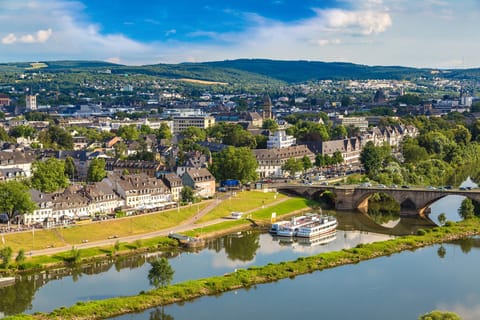
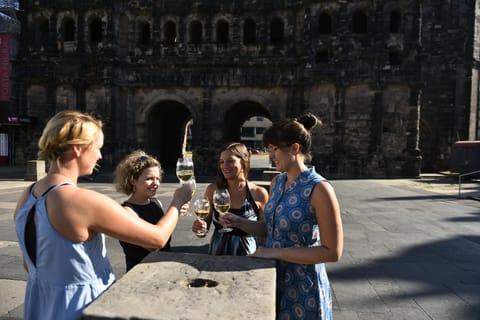
Founded as Augusta Treverorum around 16 BC and a Roman imperial residence by the late 3rd century, Trier pairs the Porta Nigra with charity wine cellars on Roman foundations and historic Mosel, Saar and Ruwer estates.
Pours: Mosel Riesling, Saar Riesling, Ruwer Riesling
Tip: See the Roman wine-ship relief in the Rheinisches Landesmuseum, then taste in a city Weinstube; Trier links all three river valleys.
Between the Mosel and Rheinhessen, the Nahe makes Riesling now ranked beside the best Mosel and Rheingau, on varied volcanic and slate soils around Bad Kreuznach.
Pours: Nahe Riesling trocken, Nahe Weissburgunder
Tip: The Nahe's varied soils make for striking side-by-side tasting; it is a longer drive, so make it a full day rather than a half.
Across the border the same river becomes Luxembourg's Moselle, focused on traditional-method Cremant and Auxerrois, with riverside towns Remich and Grevenmacher.
Pours: Cremant de Luxembourg, Riesling, Auxerrois, Pinot Gris
Tip: Visit the rock-cut cellars at Grevenmacher or Remich for Cremant; the contrast with Mosel Riesling makes a rewarding cross-border day.
Down the Rhine from Koblenz, the Rheingau is Germany's other Riesling heartland, fuller than the Mosel, with Ruedesheim and the Kloster Eberbach monastery.
Pours: Rheingau Riesling trocken, Rheingau Spaetburgunder
Tip: A long day or better an overnight; ride the Ruedesheim cable car for vineyard views and taste at Kloster Eberbach for the historical contrast.