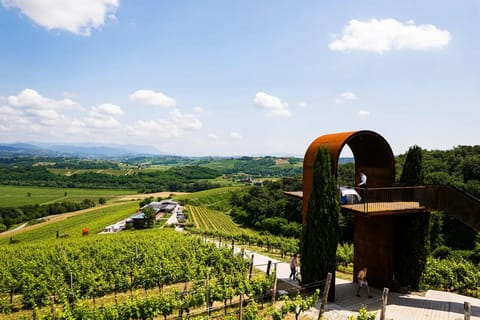
Biodynamic, organic and natural wine across Friuli-Venezia Giulia: the certified estates and low-intervention cellars.

Biodynamic in Friuli-Venezia Giulia

Gravner ★ 4.8

Biodynamic PracticingORGANIC CERTIFIEDOslavia

Josko Gravner farms 18 hectares biodynamically at Oslavia and ferments Ribolla, Pinot Grigio, Sauvignon, Chardonnay and Pignolo in buried Georgian qvevri amphorae before long oak elevage.

Tip: Ask for an older-vintage Ribolla and Bianco Breg flight; Gravner releases the wines only when the cellar considers them ready, and library vintages show the slow-oak-and-qvevri evolution.

Radikon ★ 4.8

Biodynamic PracticingORGANIC CERTIFIEDOslavia

Stanko Radikon (until 2016) and now sons Sasa and Ivan run the Oslavia cellar with extended-maceration Ribolla, Jakot (Friulano), Pinot Grigio and the Oslavje blend, all bottled at 500 ml to match a drinking session for a low-sulphite skin-contact wine. Organic and biodynamic-practising farming across the Oslavia ponca slopes.

Tip: Radikon's 500 ml format is the cellar's signature; ask for the Oslavje blend alongside the solo Ribolla to read the cellar template across two cuvees.

Damijan Podversic ★ 4.7

Biodynamic PracticingORGANIC CERTIFIEDOslavia

Damijan Podversic farms 12 hectares above Gorizia organically and biodynamic-practising, with extended-skin-contact Ribolla, Friulano, Chardonnay and Malvasia Istriana whites and a Merlot-Cabernet red.

Tip: Damijan's address sits above the city of Gorizia rather than at the Oslavia hamlet, so pair the visit with a Gorizia morning before driving up to Gravner or Radikon.

Vodopivec ★ 4.7

Biodynamic PracticingORGANIC CERTIFIEDSgonico

Paolo Vodopivec farms six monovarietal Vitovska hectares biodynamically at Sgonico on the Carso limestone karst and ferments in buried Georgian qvevri amphorae with no temperature control and indigenous yeasts.

Tip: Vodopivec's Vitovska is the Carso reference; the cellar bottles only the variety and the three expressions show different qvevri ageing windows.

Organic in Friuli-Venezia Giulia

La Castellada ★ 4.6

Biodynamic PracticingORGANIC CERTIFIEDOslavia

La Castellada in the centre of the Oslavia hamlet farms eight organic hectares; the Bensa family runs the cellar with extended-skin-contact Ribolla, Friulano, Pinot Grigio, Chardonnay and Sauvignon.

Tip: La Castellada sits within walking distance of Gravner and Radikon at Oslavia; arrange all three on a single morning if the appointments line up.

Skerk ★ 4.6

Biodynamic PracticingORGANIC CERTIFIEDSgonico

Sandi Skerk farms seven organic hectares at Sgonico on the Carso limestone karst and bottles Vitovska, Malvasia Istriana, Sauvignon, Pinot Grigio and Terrano on extended-skin-contact programmes.

Tip: Skerk's amphitheatre-shaped tasting room cut into the karst is the cellar's signature visit experience; book the tour to see it.

Zidarich ★ 4.6

Biodynamic PracticingORGANIC CERTIFIEDSgonico

Benjamin Zidarich farms his Carso plot organically at Prepotto (Duino-Aurisina) and works in a multi-storey limestone-carved cellar that extends seven floors into the karst.

Tip: The cellar tour walks all seven underground floors cut into the limestone; allow 90 minutes for the visit plus the tasting flight.

Edi Kante ★ 4.7

ORGANIC CERTIFIEDDuino-Aurisina

Edi Kante runs an 18-metre-deep limestone-carved cellar at Aurisina-Prepotto on the Carso plateau above Trieste, with organic-farmed Vitovska, Malvasia Istriana, Sauvignon and Chardonnay across the karst-and-terra-rossa parcels. The cellar pairs the Carso terra rossa over solid limestone substrate with the low-intervention stainless-and-oak approach.

Tip: Kante's 18-metre-deep cellar runs cold through the summer heat; the descent is part of the visit and the temperature drops noticeably on the way down.

Livio Felluga ★ 4.7

ORGANIC CERTIFIEDManzano

Livio Felluga at Brazzano di Cormons farms its Colli Orientali parcels organically across Rosazzo, Manzano, Buttrio and Cividale. The cellar founded by Livio Felluga (older brother of Marco) bottles the Terre Alte flagship Rosazzo blend and the Picolit DOCG half-bottle as its prestige expressions.

Tip: Pair the Friulano with the cellar's Picolit DOCG half-bottle; the cellar bottles both as flagship Colli Orientali expressions.

Lis Neris ★ 4.5

ORGANIC CERTIFIEDRomans d'Isonzo

Lis Neris at San Lorenzo Isontino farms the Friuli Isonzo gravel terraces organically. The Pecorari family cellar runs Picol Sauvignon, Gris Pinot Grigio, Jurosa Chardonnay and the Lis flagship across the Isonzo river-shaped gravel terraces.

Tip: The Picol Sauvignon and Gris Pinot Grigio pour side-by-side as the cellar contrast; ask for the Jurosa Chardonnay if it is open as the oak-aged comparison.

Le Vigne di Zamo ★ 4.4

ORGANIC CERTIFIEDCorno di Rosazzo

Le Vigne di Zamo at Corno di Rosazzo farms organic Colli Orientali parcels across Rosazzo, Buttrio and the Tre Vigne family holdings. The cellar bottles Friulano, Picolit DOCG (375 ml half-bottle) and a series of single-vineyard whites that anchor the Zamo family's Rosazzo cellar reputation.

Tip: Ask for the Picolit DOCG half-bottle alongside the Friulano; the cellar is a reference Picolit producer in the Colli Orientali half-bottle format.

Edi Keber ★ 4.6

Biodynamic PracticingORGANIC CERTIFIEDCormons

Edi Keber farms the Zegla vineyards above Cormons organically and bottles only one wine per vintage: the Collio Bianco (Friulano-Ribolla Gialla-Malvasia Istriana blend) that the family treats as the canonical Collio territorial wine. Twenty hectares across the Cormons Zegla parcels.

Tip: Edi Keber bottles only one wine per vintage; ask the cellar for a vertical of two or three back-vintages to read the territorial expression year to year.
Natural in Friuli-Venezia Giulia

Gravner ★ 4.8

Oslavia

Gravner buried his first qvevri amphorae at the Oslavia cellar in 2001 and the cellar has anchored the global low-intervention orange-wine map since.

Tip: Gravner is listed on the Raisin natural-wine guide and remains the global reference for buried qvevri orange wine. Library vintages show the slow-evolution trajectory.

Radikon ★ 4.8

Oslavia

Radikon bottles the Oslavia cellar's wines at 500 ml on the principle that the bottle should match a drinking session for a low-sulphite skin-contact wine.

Tip: Radikon's S range (Sasa and Ivan's sulphite-free line) shows the zero-added programme; the standard 500 ml line carries only a minimal bottling addition.

Damijan Podversic ★ 4.7

Oslavia

Damijan Podversic above Gorizia ferments with indigenous yeasts on the skins for extended periods (typically two months on the whites, six months on the reds), with oak elevage and minimal sulphite.

Tip: The Kaplja Bianco (Chardonnay, Friulano, Malvasia) is the cellar's flagship; combine with the Nekaj Ribolla for the cellar's two skin-contact whites.

Vodopivec ★ 4.7

Sgonico

Paolo Vodopivec at Sgonico ferments monovarietal Vitovska in buried qvevri amphorae with indigenous yeasts and no temperature control, extends skin contact to 6 to 12 months and adds minimal sulphite at bottling only.

Tip: Vodopivec ships allocations tight; ask the cellar for the Solo MM bottling alongside the standard Vitovska for the extended-elevage read.

Bressan Mastri Vinai ★ 4.5

Mariano del Friuli

Fulvio Bressan at Farra d'Isonzo bottles wines only when the family considers them ready, with extended elevage (often 6 to 10 years for the Pignolo) on indigenous yeasts and minimal sulphite.

Tip: Bressan's Pignolo reaches the market several years behind the standard schedule and rewards 10 to 20 years of bottle age; ask the cellar door for the library option.

Lowsulfite in Friuli-Venezia Giulia

Radikon (S range and 500 ml standard line) ★ 4.7

Oslavia

Radikon at Oslavia is the regional benchmark for low-sulphite bottling. The S range (Sasa Radikon's no-added-sulphite line, in the standard 500 ml format) is the canonical no-added-sulphite Friulian skin-contact white; the standard 500 ml line carries only a minimal addition at bottling.

Tip: Ask the cellar for the S range when the allocation allows; the no-added bottling carries a different shipping-and-handling note than the standard line.

Biodynamic & Natural in Friuli-Venezia Giulia, FAQ

When is the best time to visit Friuli-Venezia Giulia for wine?

Peak wine-travel season in Friuli-Venezia Giulia is spring through autumn, with harvest the standout window.

Do I need an appointment to taste at Friuli-Venezia Giulia estates?

classified-growth and grand-cru estates require booking days to weeks ahead; smaller family domaines often take walk-ins midweek.

What hours do Friuli-Venezia Giulia cellars and tasting rooms keep?

most estates open 10:00 to 17:00 by appointment, often closed Sunday and Monday.

How does tipping work at Friuli-Venezia Giulia tastings?

tipping is not expected at tastings; buying a bottle from the cellar door is the customary thank-you.

What is the one wine to try in Friuli-Venezia Giulia?

Ask the next local you meet what they would order. Friuli-Venezia Giulia rewards trust.

← Back to Friuli-Venezia Giulia wine guide